





What is athlete’s foot?
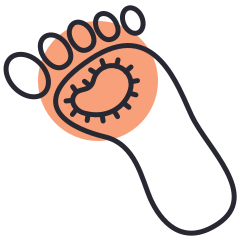
Athlete’s foot is a common fungal infection that affects your feet. The infection usually occurs on the skin of the feet and between the toes, but can also spread to the toenails and hands. It usually causes itching, cracked and dry skin, and sometimes blisters and sores.
Athlete’s foot is caused by a group of fungi called dermatophytes. These fungi thrive in warm and moist conditions. They feed on keratin, a protein found in nails, skin and hair.
Athlete’s foot is contagious and can spread easily. You can catch it by touching someone else who has it or by coming into contact with contaminated surfaces, like towels, floors, or shoes. It can transfer quickly, especially if it touches broken skin.
Who gets athlete’s foot?
Athlete’s foot (as the name suggests) is typically experienced by people who take part in sports, especially sports that cause sweating (like running) or involve bare feet (like swimming and judo). This is because their feet often sweat in trainers and create the perfect environment for the fungi to thrive.
It’s also common in people who work in jobs where they come into contact with water, and also in those who work in industrial settings.
The highly contagious nature of athlete’s foot means that it affects a large number of people. It often spreads in the family home and in primary schools where children participate in PE lessons in bare feet.
Approximately 15% of the UK population suffers from athlete’s foot, with the highest rates seen in men over the age of 16.[1]
How common is athlete’s foot?
Over 70% of people will have athlete’s foot at least once in their lives. It usually occurs between the toes but can also infect the hands. Sometimes it can spread to the sole of the foot where it causes dry and cracked skin.
Both children and adults can get athlete’s foot, although it’s more common in men and older people, and those who participate in sports or work in damp conditions.
Swimming pool users and people who work in industrial settings are the most likely to get athlete’s foot.[1]
This page was medically reviewed by
Dr Daniel Atkinson on April 24, 2025. Next review due on
April 24, 2028.
How we source info.
When we present you with stats, data, opinion or a consensus, we’ll tell you where this came from. And we’ll only present data as clinically reliable if it’s come from a reputable source, such as a state or government-funded health body, a peer-reviewed medical journal, or a recognised analytics or data body. Read more in our editorial policy.