
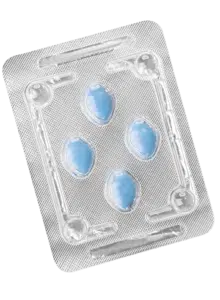
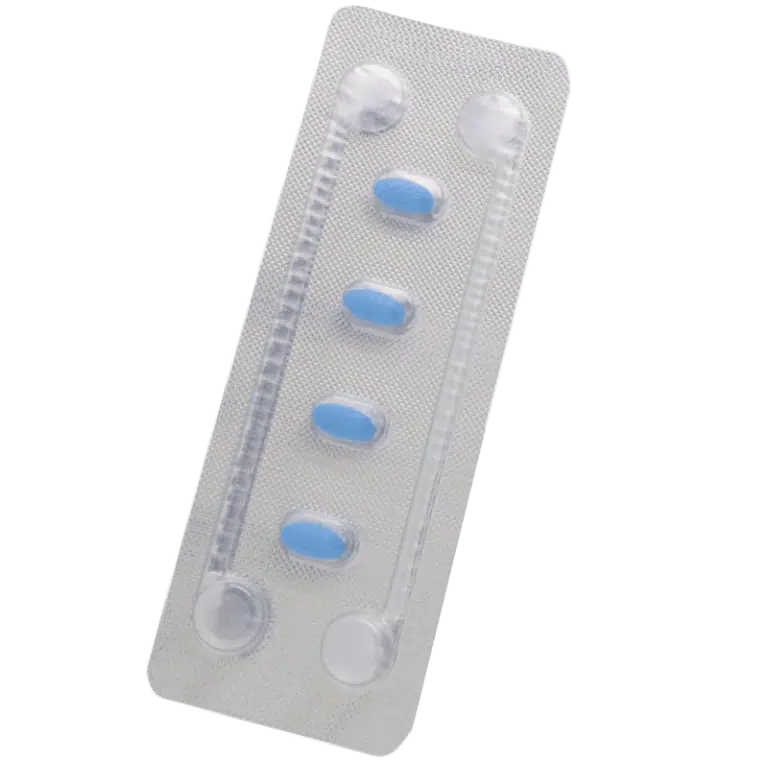
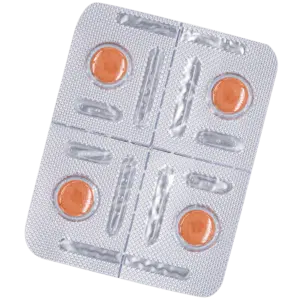
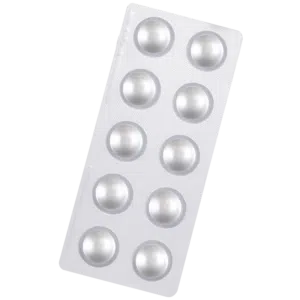
Varenicline is a pill you take everyday to help you quit smoking. It has the same active ingredient as Chantix, so they work in pretty much the same way.
Most people who approach a clinician for treatment to stop smoking aren’t ready to quit right away. Varenicline helps you stop smoking slowly, without cravings halting your progress. You can also pick the way you want to approach it, so there’s a bit of flexibility.
How does Varenicline work?
Varenicline helps you stop smoking by making smoking less enjoyable and reducing cravings. It does this by working on the receptors in your brain that transmit dopamine- the “feel-good hormone”.
Varenicline binds to these receptors, which can reduce the appeal of nicotine.[1] That means smoking won’t provide the same dopamine hit, and you won’t get as many cravings. That means Varenicline makes it a lot easier to give up smoking.
What doses of Varenicline are there?
It comes in two doses: 0.5mg and 1mg. If you go for the 0.5mg option, you’ll take one pill for the first three days. For the rest of your treatment, you’ll take it twice a day. If 1mg is right for you, you’ll still start off taking a 0.5mg pill for the first three days. Then on day 4-7, you’ll take a 0.5mg pill twice a day. For the rest of your treatment, you’ll take 1mg twice a day.
The 1mg dosing regimen for Varenicline is a little more effective, and it’s most used. But if you have certain medical conditions, you might need to go for the lower dosing schedule. Once you’ve quit smoking, your clinician might suggest you ‘taper off’ your dose to reduce any chance of withdrawal. That means you slowly take smaller and smaller amounts each day, until you’re completely finished with treatment.
This page was written by The Treated Content Team.
This page was medically reviewed by Dr. Joseph Palumbo on October 09, 2024. Next review due on October 09, 2027.
How we source info.
When we present you with stats, data, opinion or a consensus, we’ll tell you where this came from. And we’ll only present data as clinically reliable if it’s come from a reputable source, such as a state or government-funded health body, a peer-reviewed medical journal, or a recognised analytics or data body. Read more in our editorial policy.
VareniclineVarenicline
How to take Varenicline
Make sure you take Varenicline exactly as your clinician tells you. There are a few variations in how to take it, so make sure you follow their detailed instructions.
It’s best to take Varenicline after a meal. So if you’re taking it twice a day, maybe take it after breakfast and your evening meal. Take your pill with a full glass of water. Varenicline can sometimes cause nausea, so food and plenty of water can help avoid this.
What are the three dosing regimens for Varenicline?
There are a few different approaches to taking Varenicline you can try.
With the fixed quit approach, you pick a date when you want to quit smoking. Then you start taking Varenicline one or two weeks before this date.
There’s also the flexible quit approach. If you’re doing it this way, you start taking Varenicline. Then anywhere between days 8 and 35 of treatment (or weeks two and five), you stop smoking.
Finally, you have the gradual quit approach. With this approach, you aim to stop smoking by the end of week 12 of treatment. After four weeks, you should reduce how much you smoke by 50%, and 75% by eight weeks.
What happens if I make a mistake while taking Varenicline?
If you’ve forgotten to take a pill, just take it as soon as you remember. If it’s nearly time to take your next pill, just skip the missed one and carry on as normal.
If you take too much Varenicline, you might feel nauseous or even vomit. It’s always a good idea to contact a clinician if you think you’ve taken too much Varenicline.
This page was written by The Treated Content Team.
This page was medically reviewed by Dr. Joseph Palumbo on October 09, 2024. Next review due on October 09, 2027.
How we source info.
When we present you with stats, data, opinion or a consensus, we’ll tell you where this came from. And we’ll only present data as clinically reliable if it’s come from a reputable source, such as a state or government-funded health body, a peer-reviewed medical journal, or a recognised analytics or data body. Read more in our editorial policy.
VareniclineVarenicline
There are some things you need to watch out for when using Varenicline, and not everyone can use it.
Here’s the official safety info. If there’s something you’re not sure about, let us know.
VareniclineVarenicline
Varenicline: FAQ
Have something specific you want to know? Search our info below, or ask our experts a question if you can’t find what you’re looking for.
Is Varenicline similar to any other products?
Answer:
There’s a branded form of Varenicline called Chantix. It’s not available right now, and it’s not clear when or if it will be back. Because Varenicline is a generic version of Chantix, they work in basically the same way.
The main differences between Varenicline and Chantix are the names, the companies that make them, and the prices. Varenicline is a bit cheaper than Chantix, so it’s a good option if you’re not bothered about brand names.
There’s another pill that can help you quit smoking, called Zyban. It has a different active ingredient to Varenicline, and studies suggest it doesn’t work as well at helping you stop smoking.[1] But if Varenicline isn’t right for you, Zyban might be the one.
How effective is Varenicline?
Answer:
Varenicline works very well for helping you quit smoking. It’s considered the most effective method for quitting smoking, over Zyban, nicotine replacement therapy and going ‘cold turkey’.
In one study, 44% of people taking Varenicline had quit smoking by the last four weeks of treatment. That’s compared to 30% for Bupropion (Zyban) and only 18% for a placebo.
In another study that compared the efficacy of Varenicline, to a nicotine patch, 56% of people taking Varenicline had quit smoking by the last four weeks of treatment, versus 43.2% of people using a patch.[2]
How is Varenicline different from other treatments for quitting smoking?
Answer:
Lots of approaches to quitting involve replacing the nicotine with another form that doesn’t involve smoking. Lozenges, e-cigarettes and nicotine patches are all examples of this.
Although some people find this really helpful, it doesn’t solve nicotine addiction. You’ll still be dependent on nicotine, just in a different way. Varenicline can stop your nicotine dependence altogether.
How can I make Varenicline work even better?
Answer:
Varenicline is highly effective, but the most important thing when it comes to quitting is willpower. You have to want to quit, and be open to treatment. Remember that most cravings only last about thirty seconds, and they always pass.
It’s good to be aware of situations that might make you want to smoke so you can prepare and take steps to avoid it as much as possible. Switching up your routine can also be really helpful. Most importantly, remind yourself of the reasons you want to quit and the benefits for your health and future.
How long do I need to take Varenicline?
Answer:
You should follow the quit plan you’ve agreed on with your clinician. That usually means twelve weeks of taking Varenicline. Sometimes, you’ll keep using a lower dose for twelve weeks after you stop.
This can help make it easier to stick to quitting. It’s safe to take Varenicline for longer than twelve weeks, but if it’s still not working for you after a few courses, you should talk to your clinician about other options.
Treated trusted source:
Benli, A., et al (2017). A comparison of the efficacy of varenicline and bupropion and an evaluation of the effect of the medications in the context of the smoking cessation programme. Tobacco Induced Diseases, 15(1).
Ebbert, J., (2010).Varenicline for smoking cessation: efficacy, safety, and treatment recommendations. Patient Preference and Adherence, p.355.
Last updated on Oct 08, 2024.
How we reviewed this page:
Our experts continually monitor new findings in health and medicine, and we update our articles when new info becomes available.
Oct 08, 2024
Published by: The Treated Content Team.Medically reviewed by: Dr. Joseph Palumbo, Senior Medical Adviser
How we source info.
When we present you with stats, data, opinion or a consensus, we’ll tell you where this came from. And we’ll only present data as clinically reliable if it’s come from a reputable source, such as a state or government-funded health body, a peer-reviewed medical journal, or a recognised analytics or data body. Read more in our editorial policy.
This is healthcare on your terms.
All from the comfort of your device. Get access to what you need, when you need it.
100% online
Ask questions and get expert recommendations, at the touch of a button.
Tailored choices
We'll narrow down some treatments for you to choose from based on your medical profile.
Secure shipping
Receive your treatment by express delivery, in discreet packaging.
Easy automatic refills
Set your own delivery schedule and pause or make changes any time you like.
We're making healthcare more about you. Sign up to our newsletter for personalised health articles that make a difference.
Disclaimer: The information provided on this page is not a substitute for professional medical advice, diagnosis, or treatment. If you have any questions or concerns about your health, please talk to a doctor.
Dr. Joseph Palumbo
Senior Medical Adviser
Joseph joined Treated in 2023, and is one of the lead doctors providing prescribing services for the platform.
When we present you with stats, data, opinion or a consensus, we’ll tell you where this came from. And we’ll only present data as clinically reliable if it’s come from a reputable source, such as a state or government-funded health body, a peer-reviewed medical journal, or a recognised analytics or data body. Read more in our editorial policy.
Reviews you can trust
All of our reviews are collected from real patients after their treatment has been delivered.
We publish reviews collected through independent platforms including Reviews.io and Trustpilot.