
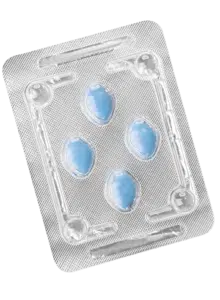
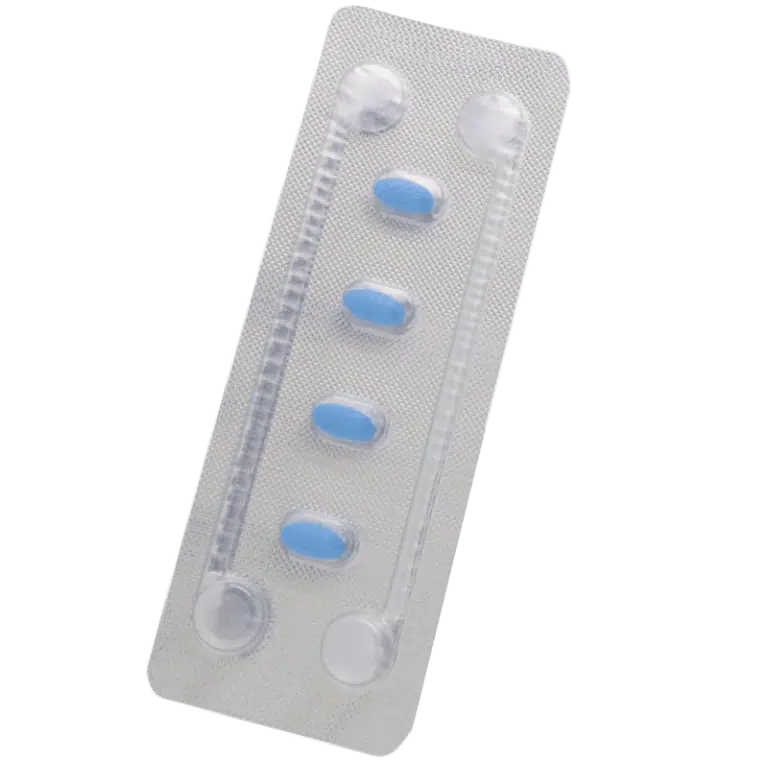

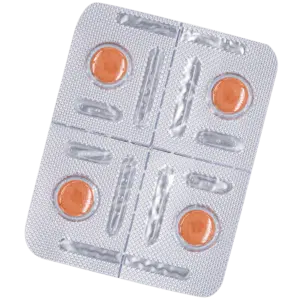



Finasteride treats benign prostatic hyperplasia (BPH). BPH is the enlargement of prostate tissue and a common risk factor of urinary tract infections in men.[1] Not all men need treatment for BPH, but some symptoms, like nocturia (waking up in the night to go to the bathroom), increased urinary frequency and urinary urgency, can make it frustrating to live with. Using medication like Finasteride helps shrink your prostate gland, which can improve these symptoms.
How does Finasteride work?
BPH is when your prostate grows too large due to changes in some of your hormone levels, including testosterone.
For most men, around 10% of their testosterone is converted into dihydrotestosterone (DHT) each day with the help of an enzyme called 5-alpha reductase (5-AR). But when your DHT levels get too high, it can lead to prostate growth. So by reducing DHT levels, your prostate can revert to its normal size.
Finasteride is in a class of medicines called 5-alpha reductase inhibitors. As the name suggests, these drugs inhibit the enzyme type 2 5α-reductase, which converts testosterone into DHT. Without this conversion, excess prostate growth becomes less likely, which improves your symptoms. [2]
What doses of Finasteride are there?
There are two doses of Finasteride available: 1mg and 5mg. But the one you use will depend on your condition. 5mg is the dose for BPH, while 1 mg is for hair loss. It’s important to take the correct dose for your condition, as the effects will be different.
Treated trusted source:
Ng M, Baradhi KM. Benign Prostatic Hyperplasia. [Updated 2022 Aug 8]. In: StatPearls. Treasure Island (FL): StatPearls Publishing; 2023 Jan-.
Smith, A. B., & Carson, C. C. (2009). Finasteride in the treatment of patients with benign prostatic hyperplasia: A review. Therapeutics and Clinical Risk Management, 5, 535-545.
This page was written by The Treated Content Team.
This page was medically reviewed by Dr Alexandra Cristina Cowell on March 27, 2025. Next review due on March 27, 2028.
How we source info.
When we present you with stats, data, opinion or a consensus, we’ll tell you where this came from. And we’ll only present data as clinically reliable if it’s come from a reputable source, such as a state or government-funded health body, a peer-reviewed medical journal, or a recognised analytics or data body. Read more in our editorial policy.
FinasterideFinasteride
How to take Finasteride
Take one Finasteride tablet a day, orally. You’ll usually take Finasteride for several months or years. You may be prescribed another medicine called doxazosin in combination with it to help control your BPH. It’s important to take it for as long as your doctor has prescribed to see the full effects.
What happens if I make a mistake when taking Finasteride?
If you forget to take a dose of Finasteride, skip the missed one and take the next dose as usual. Don’t take a double dose to make up for a missed one.
If you accidentally took more than the recommended dose, contact your doctor immediately.
How long does Finasteride take to work?
Finasteride can start to work almost instantly, but this doesn’t mean it will shrink your prostate within a couple of days. Treating BPH is a slow process. It can take approximately 6 months for your prostate to return to normal size on Finasteride. This is why it’s important to continue taking it for a long time (even if you think the medicine isn’t working).
This page was written by The Treated Content Team.
This page was medically reviewed by Dr Alexandra Cristina Cowell on March 27, 2025. Next review due on March 27, 2028.
How we source info.
When we present you with stats, data, opinion or a consensus, we’ll tell you where this came from. And we’ll only present data as clinically reliable if it’s come from a reputable source, such as a state or government-funded health body, a peer-reviewed medical journal, or a recognised analytics or data body. Read more in our editorial policy.
FinasterideFinasteride
Finasteride isn’t suitable for everyone, and there are some things that you need to be aware of when using it.
Here’s all the official info on it. If anything is unclear, let our clinician know, and they can talk with you about it.
FinasterideFinasteride
Finasteride: FAQ
Have something specific you want to know? Search our info below, or ask our experts a question if you can’t find what you’re looking for.
Can Finasteride treat hair loss?
Answer:
Yes, Finasteride is also prescribed for male hair loss.
Dihydrotestosterone (DHT), the active version of testosterone, induces hair loss by shrinking your hair follicles, causing your hair to thin. Finasteride, though, inhibits the conversion of testosterone into DHT, which can stop, slow, or reverse this hair loss. [1]
Finasteride for BPH is different for hair loss. It contains a higher concentration (5mg), compared to 1mg for hair loss. If you want Finasteride for hair loss, check the hair loss page here.
How does Finasteride compare to other treatments?
Answer:
The main mechanism of drugs treating BPH is acting on the alpha receptors. Finasteride inhibits 5-alpha reductase, preventing the production of dihydrotestosterone (DHT). Another drug, Dutasteride, is also a 5-alpha reductase inhibitor. It inhibits type 1 and 2 5-alpha reductase, working similarly to Finasteride.
On the other hand, Tamsulosin relaxes the smooth muscle of the prostate by blocking the alpha receptors. This improves urine flow and other symptoms related to BPH, but it doesn’t shrink the prostate.
All 3 are effective at treating BPH, but Tamsulosin is better as a short-term treatment for the symptoms of BPH, whereas Finasteride and Dutasteride are better for shrinking enlarged prostates.
What are the side effects of Finasteride?
Answer:
As with all medicines, Finasteride can cause side effects which might affect some people. Common side effects include:
Changes in ejaculation
Impotence
Decreased sex drive
If you’re concerned about any of the side effects, you can contact our clinician online to discuss them.
Is Finasteride similar to other treatments?
Answer:
Yes, Finasteride is the generic version of Proscar. They both contain the same active ingredient in the same concentration. The only differences are the price and the packaging. It's up to you to choose what product you prefer, but the generic one is often cheaper.
When can I stop taking Finasteride for BPH?
Answer:
You should only stop taking Finasteride when your clinician advises you to. For BPH, this could mean taking it for 6 months to even a year. You may not notice a difference in the first couple of weeks but, with time, you should see a significant improvement.
Post-finasteride syndrome is a term for patients who stop using Finasteride and still experience persistent side effects like sexual changes, anxiety and depression. It may affect around 3%-5% of those who take it. However, there are debates within the science community about whether it’s real or not.[2] If you’re worried about taking Finasteride because of this, you can talk to our clinician and discuss treatment options for BPH.
Abdulmaged M. Traish., Post-finasteride syndrome: a surmountable challenge for clinicians. Fertility and Sterility. Volume 113, Issue 1. 2020. Pages 21-50.
Our experts continually monitor new findings in health and medicine, and we update our articles when new info becomes available.
Mar 27, 2025
Published by: The Treated Content Team.Medically reviewed by: Dr Alexandra Cristina Cowell, Writer & Clinical Content Reviewer
How we source info.
When we present you with stats, data, opinion or a consensus, we’ll tell you where this came from. And we’ll only present data as clinically reliable if it’s come from a reputable source, such as a state or government-funded health body, a peer-reviewed medical journal, or a recognised analytics or data body. Read more in our editorial policy.
This is healthcare on your terms.
All from the comfort of your device. Get access to what you need, when you need it.
100% online
Ask questions and get expert recommendations, at the touch of a button.
Tailored choices
We'll narrow down some treatments for you to choose from based on your medical profile.
Secure shipping
Receive your treatment by express delivery, in discreet packaging.
Easy automatic refills
Set your own delivery schedule and pause or make changes any time you like.
We're making healthcare more about you. Sign up to our newsletter for personalised health articles that make a difference.
Disclaimer: The information provided on this page is not a substitute for professional medical advice, diagnosis, or treatment. If you have any questions or concerns about your health, please talk to a doctor.
Dr Alexandra Cristina Cowell
Writer & Clinical Content Reviewer
Cristina writes content for Treated, and reviews content produced by our other writers to make sure it’s clinically accurate.
When we present you with stats, data, opinion or a consensus, we’ll tell you where this came from. And we’ll only present data as clinically reliable if it’s come from a reputable source, such as a state or government-funded health body, a peer-reviewed medical journal, or a recognised analytics or data body. Read more in our editorial policy.
Reviews you can trust
All of our reviews are collected from real patients after their treatment has been delivered.
We publish reviews collected through independent platforms including Reviews.io and Trustpilot.