





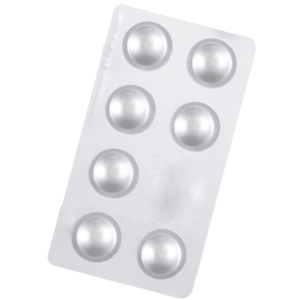
What is Celexa?
Celexa is an antidepressant tablet that contains the active ingredient citalopram. Citalopram belongs to a group of medications known as selective serotonin reuptake inhibitors, or SSRIs. They work by raising your serotonin levels, and are used to manage a range of mood-related conditions like depression, anxiety, and panic attacks.
A known side effect of SSRIs is that they can delay ejaculation. If you suffer from premature ejaculation, or PE, then taking a daily antidepressant like Celexa can help to improve your symptoms.
Because Celexa (along with other SSRIs) isn’t recognised by the FDA as a treatment for PE, the tablets are prescribed ‘off-label’, which is when a doctor prescribes a drug for a condition it isn’t licensed for.[1] It’s a perfectly safe practice, and having off-label medications available means there are more options to choose from when it comes to managing your PE.
How does Celexa work?
The active ingredient in Celexa, citalopram, works by raising your body’s serotonin levels. The primary use of citalopram, which is approved by the Food and Drug Administration (FDA), is to treat depression.[2] It was approved in 1998, and along with treating a range of mood disorders, is used off-label for conditions such as coronary arteriosclerosis, postmenopausal flushing, and premature ejaculation.
Serotonin, or 5-HT, is thought to be involved in ejaculatory control.[3] This is why SSRIs such as citalopram are widely used to help delay ejaculation and improve PE.
What doses of Celexa are there?
Celexa is available in three doses: 10mg, 20mg, and 40mg.
There is no recommended dose for treating PE with Celexa. Because it’s used off-label, there isn’t a standard dose recognised by the FDA.
When starting a new medication, a clinician will often recommend you start on a low dose to see how it suits you. This might be the case for Celexa — if you start out on the 10mg tablets and don’t think your PE is improving, you can ask about moving up to a higher strength pill.
How we source info.
When we present you with stats, data, opinion or a consensus, we’ll tell you where this came from. And we’ll only present data as clinically reliable if it’s come from a reputable source, such as a state or government-funded health body, a peer-reviewed medical journal, or a recognised analytics or data body. Read more in our editorial policy.