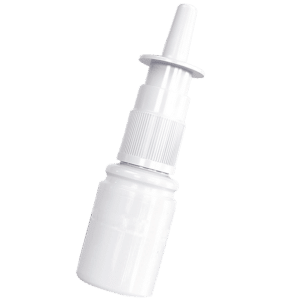
What is Mometasone?
Mometasone is a steroid nasal spray that helps treat symptoms of sinusitis. It reduces inflammation in your nose, helping to relieve a blocked and stuffy nose. It doesn’t treat the root cause of sinusitis, which is often bacterial, but it can make your symptoms easier to live with.
How does Mometasone work for sinusitis?
Sinusitis is an infection that causes inflammation in your sinuses (small, air-filled spaces in your face). This leads to symptoms like blocked nose, congestion, swelling, and tenderness around your cheeks, nose and eyes.
Mometasone, as a corticosteroid, works by reducing this inflammation and improving your symptoms.[1]
What type of drug is Mometasone?
Mometasone is a type of drug called a corticosteroid. It’s a potent steroid with strong anti-inflammatory properties.[2] Studies show mometasone nasal spray is a tolerable and safe treatment.[3]
How does Mometasone compare with Fluticasone?
Mometasone and Fluticasone are two corticosteroid nasal sprays that can treat sinusitis symptoms. They’re almost equally potent, so there should be little difference in how well they work. One study that compared both treatments found that both were significantly effective at improving nasal symptoms compared to the placebo.[4]
What doses of Mometasone are there?
Mometasone comes in one dose of 50 mcg. The usual dose is one spray in each nostril twice daily.
Treated trusted source:
- PubChem (2025). Mometasone. [online]
- NHS. Steroid Ladder.
- Lange, B., et al. (2005). Efficacy, cost-effectiveness, and tolerability of mometasone furoate, levocabastine, and disodium cromoglycate nasal sprays in the treatment of seasonal allergic rhinitis. Annals of Allergy, Asthma & Immunology, 95(3), 272-282.
- Aneeza, W. H., et al. (2013). Efficacy of mometasone furoate and fluticasone furoate on persistent allergic rhinoconjunctivitis. Allergy & Rhinology, 4(3), e120.
How we source info.
When we present you with stats, data, opinion or a consensus, we’ll tell you where this came from. And we’ll only present data as clinically reliable if it’s come from a reputable source, such as a state or government-funded health body, a peer-reviewed medical journal, or a recognised analytics or data body. Read more in our editorial policy.