VerifiedFact Checked
Can I buy semaglutide and will it help me lose weight?

Can I buy semaglutide and will it help me lose weight?

Semaglutide is a clinically proven weight loss treatment, available as an injection under the brand name Wegovy. It’s also a treatment for type-2 diabetes, available as an injection called Ozempic, or as an oral tablet called Rybelsus. These are sometimes prescribed off-label for weight loss, too.

Daniel Atkinson
Medically reviewed by
Daniel Atkinson, Clinical Reviewer

In this guide we’ll take a look at what semaglutide is, how it works in your body to help you lose weight, and answer whether or not you can buy semaglutide without a prescription.

Go to
Medically reviewed by
Dr Daniel Atkinson
Clinical Reviewer
on Mar 24, 2025.
Meet Daniel  
Daniel

Last updated on Mar 23, 2025.

Was this article useful?

What is semaglutide?

Semaglutide is a medication that was originally developed to treat type-2 diabetes. The first steps towards discovering semaglutide were taken after a Canadian scientist noticed that the venom of the Gila monster lizard contained a hormone called exendin-4 that affected blood sugar levels. Research began in the mid-1990s to see whether this hormone could be used to treat diabetes.

A synthetic version of the hormone was eventually approved a decade later. It became known as a glucagon-like peptide-1 (GLP-1) receptor agonist called Exenatide. This was the first medicine of its type to get approval for the treatment of type-2 diabetes. After it was noticed that both mice and humans that were on a GLP-1 receptor agonist for diabetes lost weight, scientists started to investigate whether or not they could be used as a treatment for obesity.

In 2017, the GLP-1 receptor agonist semaglutide was approved for type-2 diabetes treatment in the US, as an injection under the brand name Ozempic. Later in 2019, it was approved as an oral tablet called Rybelsus. Finally, in June 2021, semaglutide was approved as an injectable treatment for weight loss, known as Wegovy.

How does Semaglutide work in the body?

GLP-1 receptor agonists like semaglutide mimic the action of naturally occurring GLP-1 hormones. They attach to the receptors of GLP-1, telling your body to increase the amount of insulin secreted by your pancreas. This process usually happens naturally, but in people with type-2 diabetes, it either doesn’t work properly, or doesn’t happen at all. This causes the increased blood sugar levels associated with type-2 diabetes. Taking a GLP-1 receptor agonist can restore the proper release of insulin after eating, and help regulate your blood sugar levels if you have type-2 diabetes.

How does semaglutide work for weight loss?

Semaglutide helps to regulate your appetite by making you feel fuller for longer after eating. This should help you to feel less hungry, cut down how much you eat, and reduce any cravings you have for food. It slows down how quickly your stomach empties, which helps you feel satisfied for longer after eating – so you’re less likely to reach for a snack after dinner. This appears to be how semaglutide helps you lose weight – but we still don’t completely understand how it works.

Unlike some other GLP-1 receptor agonists, the medicine in a semaglutide syringe is long-acting, which is why you only have to take it once a week. However, if you’re using Rybelsus oral tablets, you’ll need to take one every day.

What are the potential side effects when using semaglutide?

There are a few side effects to be aware of if you’re thinking of taking semaglutide, but not everyone will get them. The most common side effects of semaglutide include:

  • A headache;
  • Nausea and vomiting;
  • Diarrhoea or constipation;
  • Stomach pain;
  • Weakness;
  • Tiredness;
  • Dizziness;
  • Indigestion or an upset stomach;
  • Reflux or heartburn;
  • Burping or flatulence;
  • Bloating;
  • Inflammation of the stomach;
  • Gallstones;
  • Hair loss;
  • A reaction at your injection site;
  • Low blood sugar levels if you have diabetes;
  • Increased heart rate;
  • An increase in pancreatic enzymes in your blood tests.

There are a couple more serious side effects of semaglutide as well. Speak to your doctor and get medical help as soon as you can if you get any of the following symptoms:

  • Complications of diabetic eye disease. There’s a chance any eye problems caused by diabetes could become worse while using semaglutide – speak to your doctor if you have changes in vision or other eye problems while on this medicine.
  • Inflamed pancreas. Symptoms of this may include severe pain in your stomach that doesn’t go away, which can move to your back.
  • A rare but severe allergic reaction. If you have any breathing problems, swelling of your face, lips, tongue, or throat, difficulty swallowing, sudden wheezing, a fast heartbeat, pale and cold skin, or you feel dizzy and weak – seek medical attention right away.

Which medications use the active ingredient semaglutide?

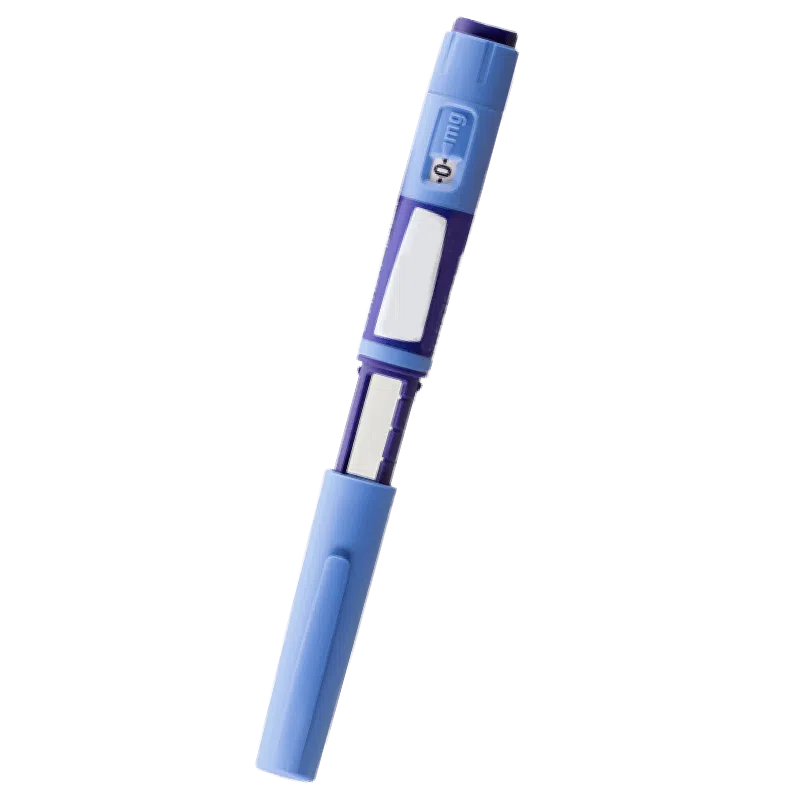
There are currently three different medications that use semaglutide as their active ingredient. Ozempic is an injectable form of semaglutide in a pre-filled pen that’s approved as a type-2 diabetes treatment. Rybelsus is another treatment for type-2 diabetes that contains semaglutide, but it comes as a daily tablet instead of a weekly injection. This might suit you better if you’re not a fan of needles.

And finally, there’s Wegovy (another injection treatment), which is the only version of semaglutide that’s specifically licensed for weight loss. However, some doctors might prescribe Rybelsus or Ozempic “off-label” as a weight loss treatment. This means you won’t be taking it for its approved purpose, but that your doctor still thinks it’s an appropriate treatment for you.

Who is semaglutide suitable for?

Semaglutide medications are a suitable treatment for high blood sugar in people with type-2 diabetes, so long as they aren’t allergic to semaglutide or any of the other non-active ingredients. It’s usually prescribed on its own to help you control your blood sugar levels if diet and exercise haven’t worked, and you can’t use metformin (which is another type of type-2 diabetes medicine). It can also be prescribed alongside other medicines like metformin if your blood sugar levels aren’t controlled well enough by alternative methods alone.

For weight loss, Wegovy should be used alongside a reduced-calorie diet and extra exercise in adults with a BMI of 30 kg/m2 or more. People with a BMI of more than 27 kg/m2 but less than 30 kg/m2 who have health issues related to their weight can also be prescribed Wegovy.

Using GLP-1 receptor agonists like semaglutide may increase your risk of acute pancreatitis. So you shouldn’t use semaglutide if you’ve had pancreatitis before. And if you get pancreatitis while using semaglutide, you should stop using it and speak to your clinician to find out what your options are.

Warning

Are there any contraindications to using semaglutide?

There are no contraindications to using Ozempic or Wegovy injections, other than hypersensitivity to semaglutide or one of the other inactive ingredients. If you’re using Rybelsus alongside levothyroxine (a medicine for an underactive thyroid), or warfarin (an anticoagulant to treat blood clots), you might need a bit of extra monitoring from a doctor. This is to make sure Rybelsus isn’t affecting your other medications.

Can I get semaglutide without a prescription?

Ozempic, Rybelsus, and Wegovy are all prescription-only medicines – you won’t be able to get them over the counter. A doctor will need to make sure they’re safe and effective for you before you can take them.

Semaglutide tablets or injection: which is available as a weight loss treatment?

The only medicine containing semaglutide that’s officially approved by the FDA as a weight loss treatment is Wegovy. Wegovy is an injection that comes in a pre-filled pen that comes in doses ranging from 0.25 mg to 2.4 mg. Ozempic injections and Rybelsus tablets also contain semaglutide, but these aren’t approved to help you lose weight.

Will semaglutide help me lose weight?

Semaglutide is a clinically proven treatment that should help you to lose weight. In a randomised controlled trial, where 1,961 non-diabetic individuals were treated with 2.4 mg of injectable semaglutide or placebo, the semaglutide group lost (on average) 15% of their weight, compared to 2% in the placebo group. What’s more, 86% of the semaglutide group lost at least 5% of their weight, compared to only 32% of the placebo group.

Reference Popover #ref1
Reference Popover #ref2
Reference Popover #ref3
Reference Popover #ref4
Reference Popover #ref5
Reference Popover #ref6
Reference Popover #ref7

Sourcing guidelines:

When we present you with stats, data, opinion or a consensus, we’ll tell you where this came from. And we’ll only present data as clinically reliable if it’s come from a reputable source, such as a state or government-funded health body, a peer-reviewed medical journal, or a recognised analytics or data body. Read more in our editorial policy.

Tell us what you want to hear.

Have a subject you’d like us to cover in a future article? Let us know.

Give us the inbox treatment.

We're making healthcare more about you. Sign up to our newsletter for personalized health articles that make a difference.

Disclaimer: The information provided on this page is not a substitute for professional medical advice, diagnosis, or treatment. If you have any questions or concerns about your health, please talk to a doctor.

Suggest a health guide

Tell us your idea here.

(And leave your email too, so we can let you know if we write an article based on your suggestion.)