
How to manage exercise when using weight loss injections
Exercising with fatigue and side effects: expert advice to guide you through it.
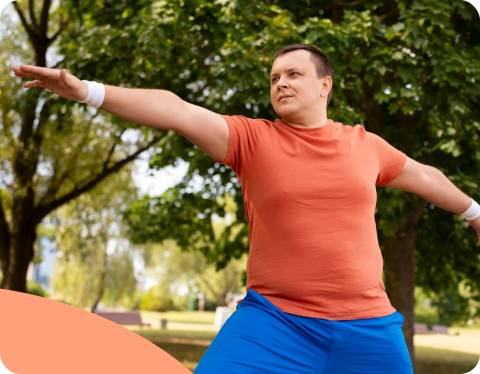

Weight loss injections (WLIs) like Wegovy are relatively new treatments that work by reducing appetite and slowing digestion. They’ve proven to be effective at reducing calorie intake to support weight loss,1 however sometimes their side effects can make it challenging to exercise. Fortunately, there are some things you can do to minimise these side effects and make exercising alongside treatment more manageable.
- Weight loss injections can support weight loss, but they can also lead to side effects like nausea, fatigue and dehydration.
- When starting to exercise, it’s best to begin with low-impact exercises to prevent burnout and fatigue.
- Listen to your body’s energy levels and adjust your intensity accordingly.
- Eating a lot of protein and doing strength training can help sustain your energy and preserve your muscle mass.
- Prevent dehydration with plenty of water to manage nausea and fatigue.
How can weight loss injections impact exercise?
Any medication can cause side effects for some people, so it goes without saying that WLIs can too. Some of their most common side effects include diarrhoea, vomiting, constipation, stomach pain, headache, nausea, and tiredness. These side effects could make your experience with WLIs challenging and impact your exercise experience in the following ways.
Fatigue
WLIs essentially work by deceiving your brain into thinking you’re full. While this is good to stop you from overeating, it can lead to a decrease in energy levels (because you’ll be eating less).2
Your body won’t be used to this lower intake of energy, so you might feel more tired than usual. Additionally, GLP-1 receptors (the type of drug in WLIs) also work by lowering blood sugar levels, which can further contribute to feelings of tiredness.
So until your body adjusts to these lowered energy levels, you might find it challenging to exercise.
Dehydration
While WLIs don’t directly cause dehydration, side effects such as diarrhoea and vomiting can.
Our body is made up of 60% water, and staying hydrated is key for effective body function. When you don’t drink enough water, for instance, your internal temperature can rise, making you feel tired, dizzy and light-headed during exercise.3 Studies have also found that dehydration can reduce flexibility, speed, and exercise endurance.4
Muscle loss
WLIs are proven to be effective at helping you lose weight. But when weight is lost rapidly, muscle mass can be lost too,5 which can make exercising more difficult.
Nausea
The active ingredients in WLIs (GLP-1 receptor agonists) work by mimicking hormones called incretins. These hormones are released right after a meal to boost insulin release, reduce glucagon production and slow gastric emptying. Slowing gastric emptying can help reduce appetite (and thus caloric intake), but it can also cause nausea and vomiting, particularly when you start treatment. This could make exercising uncomfortable and potentially make it hard to continue the treatment.
Change treatment or change exercise?
When you start treatment with WLIs, certain side effects, like nausea, vomiting and headaches, are common. This is pretty normal among long-term medicines, and it usually just means your body hasn’t adapted to the active ingredients yet. But once your body adjusts, these side effects should either go away or feel more manageable. We can’t say for sure how long you’ll experience side effects as it’s different for everyone. But they’re usually at their strongest for the first few days after a dose increase.
If you’re finding your side effects really difficult to manage, it might be good to reach out to your doctor. They might need to adjust your treatment to a lower dose or suggest an alternative treatment.
How to manage exercise when using weight loss injections
Without exercise, you probably won’t get the best results from weight loss injections.
But as we’ve discussed, you might not find it easy. If you run into problems when trying to exercise alongside your injections, here are some practical things you can do.
Pace and adjustment
Don’t rush into a fitness routine that isn’t practical for your lifestyle or body. Instead, create a routine that works for you.
Experts recommend aiming for 150 minutes a week, roughly equivalent to 2.5 hours, so you should aim to hit this target if possible. Spreading out your exercise over several days will allow for proper rest between sessions.
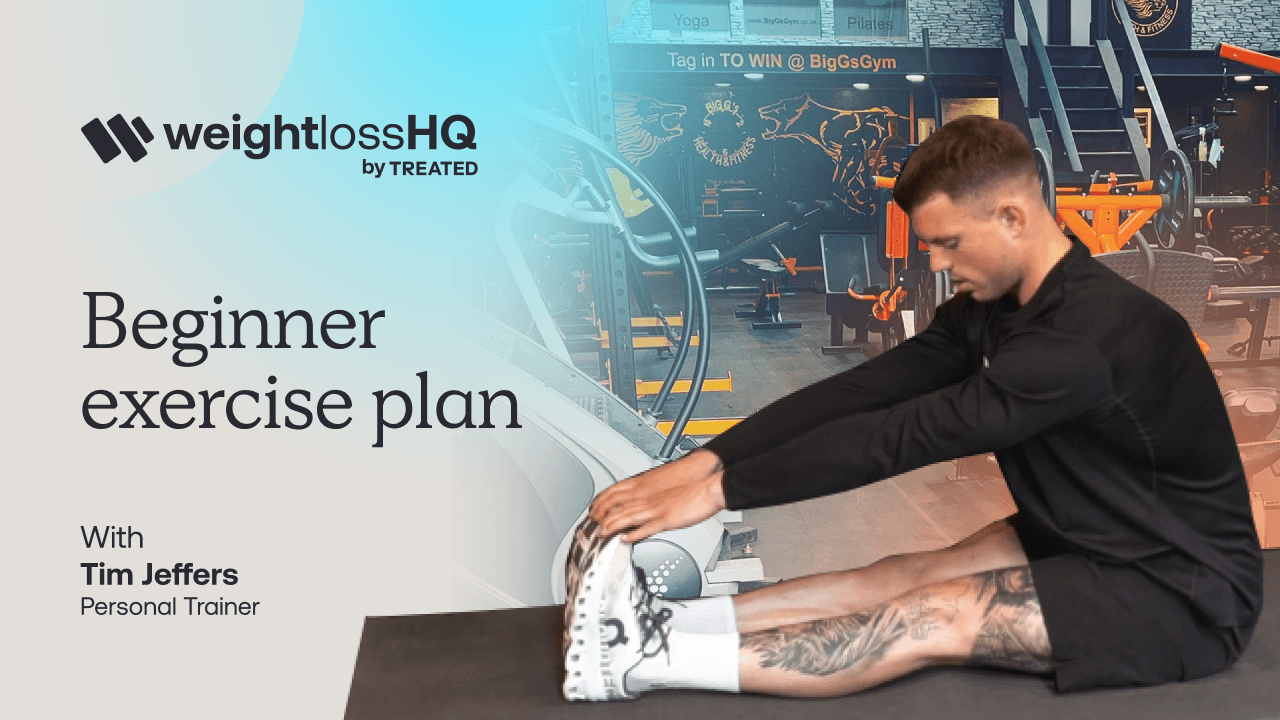
If you’re new to exercise or haven’t done it in a while, take it slow with low-impact activities to avoid injuries and burnout. Low-impact exercises include walking, cycling, yoga and swimming. As you feel more comfortable, gradually increase the intensity of your workouts.
Also, be flexible with your exercise plans to how you’re feeling each day. For instance, if you feel nauseated, avoid workouts involving lots of rigorous movements, such as dancing and jumping. Instead, opt for slow-moving exercises, such as pilates or yoga.
Staying hydrated
On average, the human body needs around six to eight glasses of fluids a day to maintain optimal hydration levels.6 A reliable indicator of hydration status is the colour of your urine. Clear or pale urine indicates good hydration levels, whereas if it’s a darker yellow you’re probably dehydrated.
If you’re physically active you’ll need more hydration, too, so it’s best to carry a water bottle whenever you plan to exercise.
While water is the best option for hydration, it’s not to everyone’s taste. Suitable alternatives include:
- Non-caffeinated teas, like peppermint or chamomile tea
- Coconut water (but no more than 250ml a day)
- Milk
- Sports drinks
These alternatives should be limited to only one glass a day.
Mixing a bit of squash with water is also a decent option. But remember to check the sugar content, as some drinks can spike your sugar levels. Also, try to minimise coffee and alcohol, as these can make you more dehydrated.
Strength training
Strength training activities (also known as resistance training) are crucial when using WLIs. That’s because weight loss from WLI may increase the chance of it being from muscle as well as fat, which reduces overall strength.7 Strength training exercises include weight lifting, push-ups, squats or yoga. These exercises contract and tear your muscles, allowing them to repair and grow back stronger.
An additional benefit of strength training is that it can prevent sarcopenic obesity. Individuals with obesity have the added strain of carrying more weight, which requires adequate support. Without this support, the muscles will become weaker and the bones frail. Regular strength training activities can counteract this risk by facilitating weight loss and muscle building.7
When using WLIs, it’s possible for your metabolism to slow down. But maintaining muscle mass can give a little boost to your metabolism and help avoid a drastic drop. Muscle tissue burns more calories than fat tissue at rest, so even if you’re not actively exercising, you’ll burn more calories throughout the day. The faster metabolism and higher caloric needs mean achieving a calorie deficit and losing weight is easier.
Changing your diet
Adjusting your diet to complement your weight loss treatment can help minimise the side effects and help incorporate exercise into your daily routine.
While using WLIs, it’s recommended that you maintain a calorie deficit diet. To make this change sustainable, slowly reduce your calorie intake to allow your body to adjust to fewer calories. Opt for low-density foods, such as whole fruits, vegetables, whole grains and lean meats, as they’ll keep you fuller for longer and provide sustained energy. Additionally, having smaller, more frequent meals can help maintain energy levels throughout the day and alleviate nausea.
To preserve muscle mass during weight loss, eat more protein-rich foods. This includes Greek yoghurt, lean meats, chickpeas and tofu. The protein will support muscle growth.
In some cases, taking multivitamins might be helpful, especially if you’re unable to get the required nutrients and vitamins from your diet alone. Some multivitamins will also help tackle fatigue and maintain good energy levels for exercise. But before taking any vitamins, it’s best to consult with your doctor to make sure they’re right for you.
Listening to your body
Losing weight can affect your energy levels, which might in turn impact how you exercise. Everyone is different, so only you know how much you’re capable of exercising each day.
Pay attention to how you feel before exercising. If you’re feeling tired, unwell or dizzy, for instance, it might be wiser for you to skip exercise and take a rest day. Alternatively, if you’re feeling tired but capable of exercising, opt for low-intensity activities. And on days you’re feeling energised, engage in high-intensity exercises.
By listening to your body and modifying your exercises accordingly, you can prevent overexertion.
Getting help
Combining exercise and weight loss treatments can be both beneficial and challenging when you’re looking to lose weight. While WLIs can effectively help you lose excess weight, they can cause side effects that can be hard to deal with. But by adopting these strategies, like keeping hydrated, and including more protein in your diet, you can overcome some of these side effects. If, however, you need help managing the side effects, you can contact your doctor. They might suggest lowering the dose or trying an alternative treatment.
- O’Neil, P.M., Birkenfeld, A.L., McGowan, B., Mosenzon, O., Pedersen, S.D., Wharton, S., Carson, C.G., Jepsen, C.H., Kabisch, M. and Wilding, J.P.H. (2018). Efficacy and safety of semaglutide compared with liraglutide and placebo for weight loss in patients with obesity: a randomised, double-blind, placebo and active-controlled, dose-ranging, phase 2 trial. The Lancet, 392(10148), pp.637–649.
- Blundell, J., Finlayson, G., Axelsen, M., Flint, A., Gibbons, C., Kvist, T., & Hjerpsted, J. B. (2017). Effects of once‐weekly semaglutide on appetite, energy intake, control of eating, food preference and body weight in subjects with obesity. Diabetes, Obesity & Metabolism, 19(9), 1242-1251.
- Sawka, M.N., Latzka, W.A., Matott, R.P. and Mountain, S.J. (1998). Hydration effects on temperature regulation. International Journal of Sports Medicine, [online] 19 Suppl 2, pp.S108-110.
- Gatorade Sports Science Institute. (n.d.). Does dehydration really impair endurance performance? Recent methodological advances helping to clarify an old question.
- Ida, S., Kaneko, R., Imataka, K., Okubo, K., Shirakura, Y., Azuma, K., Fujiwara, R. and Murata, K. (n.d.). Effects of Antidiabetic Drugs on Muscle Mass in Type 2 Diabetes Mellitus. Current Diabetes Reviews, [online] 17(3), pp.293–303.
- NHS (2023). Water, Drinks and Your Health. [online] nhs. uk.
- National Institute on Aging. (n.d.). How can strength training build healthier bodies as we age?
When we present you with stats, data, opinion or a consensus, we’ll tell you where this came from. And we’ll only present data as clinically reliable if it’s come from a reputable source, such as a state or government-funded health body, a peer-reviewed medical journal, or a recognised analytics or data body. Read more in our editorial policy.

Share your thoughts.
Was this info helpful?