
Side effects of Wegovy
What side effects Wegovy causes, and what to do about them.


Wegovy is an effective treatment for weight loss.9 But like any other medication, it can come with some side effects. Before you get too concerned, though, it’s worth knowing that some people don’t experience any at all. And that most of them are mild and tend to go away pretty quickly. On top of that, to lower the chance of side effects, the treatment plan involves gradually increasing the dose from the lowest (0.25mg) to the highest (2.4mg). This allows your body to adapt to the treatment more effectively.
If you do experience side effects, particularly common digestive ones like nausea, vomiting, and stomach pain, it might give you peace of mind to know that these symptoms usually get better with time. But dealing with them might mean making some adjustments to your diet and taking supplements.
So let’s see what the common, serious and long-term side effects of Wegovy are; when they start and go away, and what you can do to better manage these side effects to get the best from your treatment.
What are the side effects of Wegovy?
Wegovy side effects tend to be the same across doses (0.25mg, 0.5mg, 1mg, 1.7mg, and 2.4mg), but their severity can vary. The 2.4mg dose, for example, might give you more severe nausea than the 0.5mg dose does. Occasionally you might notice different side effects on the higher doses that you didn’t get with the lower ones, but it’s rare.
For a complete list of possible side effects, make sure to read the patient information leaflet (PIL) before starting treatment.
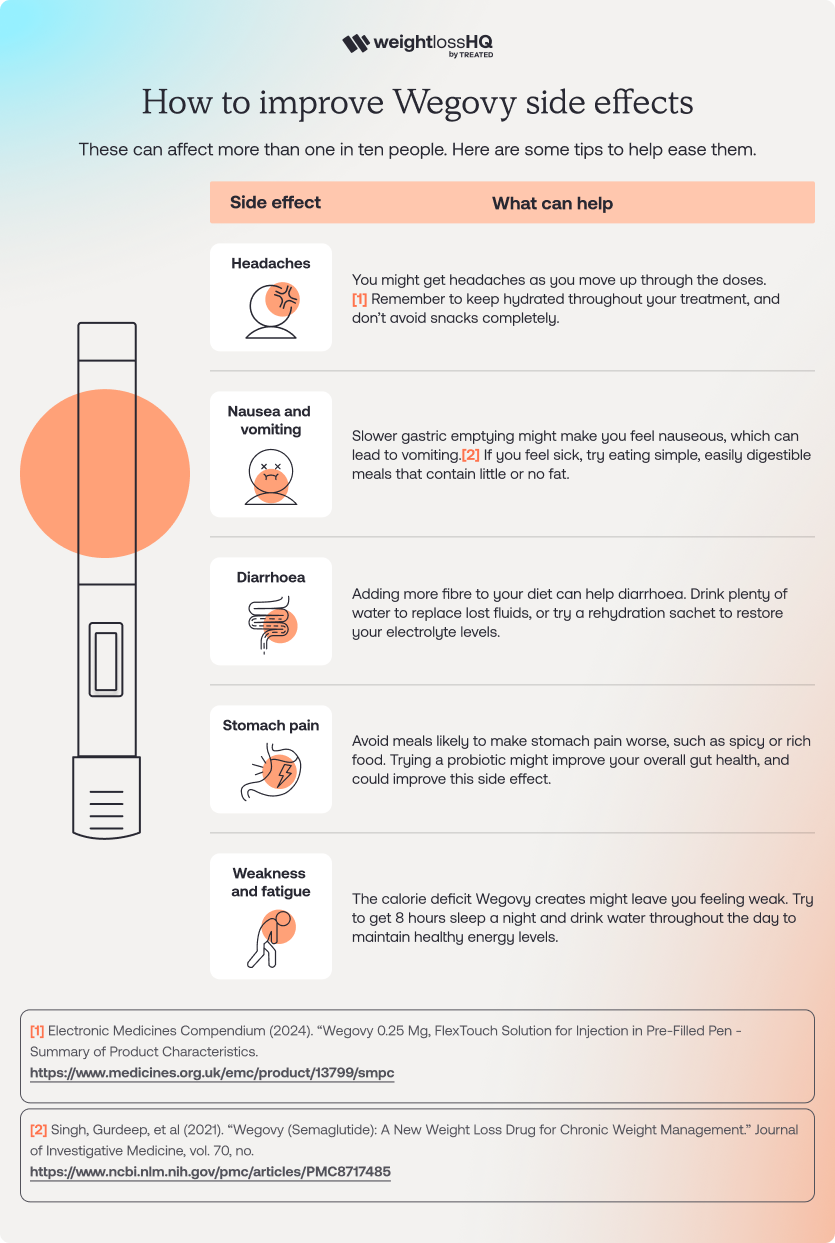
Very common side effects
These may happen in more than one in ten people:
- Headache
- Feeling sick (nausea)
- Being sick (vomiting)
- Diarrhoea or constipation
- Stomach pain
- Feeling weak or fatigued
For most people, the side effects fade within a few weeks and can be lowered by adjusting your diet plan or dosage, or taking medication for your symptoms. But make sure to discuss these decisions with your doctor.
Common side effects
These may happen in up to one in ten people:
- Hair loss
- Dizziness
- Upset stomach
- Burping
- Flatulence
- Feeling bloated
- Heartburn
- Issues with your gallbladder like gallstones
- Injection site reactions
- Low blood sugar if you have diabetes
Serious side effects
Besides the more common side effects we’ve already talked about, Wegovy weight loss injections come with some potentially dangerous side effects:
- Issues with your eyesight if you’re diabetic. They’re listed in the leaflet as common serious side effects. If you have diabetes you should tell your doctor if you experience eye problems during your treatment.
- Inflamed pancreas (acute pancreatitis). Signs may include severe and persistent stomach pain that can spread to your back.
- Severe allergic reactions (like anaphylactic shock). Symptoms include breathing problems, wheezing, swelling in your face, lips, tongue, fast heartbeat, pale, cold skin and feeling dizzy or weak.
Typically, about 5 to 10% of the people using Wegovy have to stop because of serious side effects. One study showed only 5.3% stopped using Wegovy because of side effects,3 while FDA trials found that roughly 7% of people found the side effects bad enough to stop using Wegovy.1
If you notice these symptoms, get in touch with your doctor as soon as possible because they could be life-threatening.
Are there long term side effects of Wegovy?
While it’s not too common, there’s a chance you might have some long-term side effects from Wegovy. These include gallbladder or kidney problems, diabetic eye issues, or mental health issues.
If you notice symptoms like gassy stomach pain, indigestion, a fever that keeps coming back, really bad nausea or frequent vomiting, feeling bloated, or if your eyes or skin start turning yellow, it’s important to reach out to your doctor as soon as possible. These could all be signs of gallbladder problems.
If you have diabetes, your doctor may ask you to do regular eye check-ups and monitor your kidney function closely. This is because semaglutide, the active ingredient in Wegovy, can cause kidney problems and a worsening of chronic kidney disease.6
It’s also thought that Wegovy might worsen diabetic eye conditions like diabetic retinopathy, so a dedicated trial has been commissioned to look at the long-term effects of semaglutide on this condition.7
What causes Wegovy’s side effects?
Wegovy’s gastrointestinal (digestive) side effects largely happen because of the way it works to help you lose weight. One of the most important ways it works involves mimicking a type of hormone called incretins, which naturally kicks in after you eat. The result? Wegovy increases insulin release, decreases glucagon production and slows down stomach emptying.10 In other words, it helps you feel fuller for longer and reduces cravings.
But while slower stomach emptying can help curb your appetite and cut down food consumption, it can also lead to side effects like nausea, vomiting, constipation and diarrhoea — especially when you first start treatment. These side effects can then lead to dehydration and nutrient deficiencies, which, in turn, may pave the way for other issues like hair loss or fatigue.
When do Wegovy side effects start?
Some side effects like headaches, nausea and vomiting are usually most noticeable after the first injection, and can last anywhere from a few days to a few weeks. But these tend to ease as your body gets used to the treatment.
One study found that it took an average of 23 days for serious side effects like pancreatitis to appear, while for the side effects of moderate and weak intensity—mostly gastrointestinal issues—the averages were around six and seven days respectively.10
Headaches, one of the most common side effects reported in clinical studies,1 may start at the beginning of the treatment or after you increase the dose. They may be caused by dehydration, but in rare cases, headaches can occur due to low blood sugar, another side effect of Wegovy. You need to ask your doctor for further advice and if needed, treatment for headaches.
Many people also report fatigue, stomach cramps, diarrhoea, constipation or heartburn in the first few weeks. But these side effects may start anytime during your treatment.
Other side effects, like hair loss, may begin later into the treatment, usually after a few months and following significant weight loss. But hair loss usually goes away with the use of supplements for hair growth.
Are there side effects when you miss a dose of Wegovy?
If you forget to take your Wegovy dose, you might notice some withdrawal symptoms, like feeling hungrier than usual, having more cravings, and struggling to control your appetite. Your blood sugar levels may also spike—common signs include passing more urine than normal, headaches, blurred vision, and feeling sick, thirsty, or tired—so you may need to monitor your blood sugar closely in this case.
Here’s what to do if anything happened to throw off your routine and you forgot to inject a dose:
- if it’s been five days or less since your missed dose, take it as soon as you remember. Then, continue with your regular schedule for your next jab;
- if it’s been more than five days since your missed dose, skip it altogether and continue with your regular dosing routine on the next planned day.
Don’t ever take a double dose to make up for the missed one.
What are the risks and warnings when taking Wegovy?
While for most people Wegovy is safe and doesn’t pose any major dangers to health, some medical issues can increase its health risks. Discuss your treatment options with your clinician if you have certain medical conditions or other factors that affect your health, which include:
- Diabetes, because Wegovy jabs can cause low blood sugar if you have diabetes;
- Diabetic eye problems, since Wegovy can worsen diabetic eye conditions like diabetic retinopathy;
- Pancreas problems like pancreatitis, as Wegovy may exaggerate these problems;
- Kidney issues, because Wegovy can cause side effects like being sick, which may cause dehydration. This is especially severe if you have kidney problems;
- Allergic reactions to semaglutide, the active ingredient in Wegovy, or any of its other ingredients; and:
- Depression, mood problems or sleep-related issues including insomnia, because there are reports that Wegovy can cause depression or increase your risk of suicidal thoughts.5 But mental health problems like depression and anxiety aren’t listed in Wegovy’s leaflet as side effects and other studies have found no connection between the use of semaglutide and increased suicidal ideation.8
If you have any of these issues, it’s important to be open and honest with your clinician before starting the treatment. Your doctor may suggest more frequent monitoring while you’re on Wegovy or recommend safer alternative treatments that are better suited to your health.
Wegovy also comes with a boxed warning: Risk of thyroid cancer. A boxed warning is the most serious warnings from the Food and Drug Administration (FDA), highlighting potential life-threatening side effects that need careful consideration before using the medication. In the case of Wegovy, it’s because the use of semaglutide has been linked to a type of thyroid cancer in rodents, but this hasn’t been reported in human trials.2
How can I reduce the side effects of Wegovy?
First up, if you have any side effects, don’t hesitate to contact your clinician. They’re the only ones who know your specific case and can make the best decision for you. Sometimes, you might need a dose adjustment to keep the side effects at bay.
Common symptoms and how to manage them
We’ll talk about some of the most common side effects of Wegovy like diarrhoea, dehydration, constipation, nausea and vomiting. Managing these side effects is not only important to eliminate the discomfort, but could also affect how well the treatment works, as having to deal with side effects like nausea and vomiting can make it difficult to stick to your treatment.
We’ll give you specific advice for some common side effects below, but if you’re looking for a quick guide, here are some easy steps to help minimise Wegovy side effects:
- Try eating smaller meals to avoid feeling sick, having stomach pain, or feeling bloated.
- Go for bland and low-fat foods to avoid nausea and vomiting.
- Be mindful of your eating and stop when you feel full.
- Increase your fibre and water intake to avoid constipation.
- Sitting up straight after meals can also help with some stomach issues.
- Stick to a consistent injection schedule and rotate injection sites.
- Keep an eye on your blood sugar, eye, kidney, and thyroid health.
Dehydration
Dehydration can happen as a consequence of diarrhoea and vomiting due to losing water and salts from your body. Some signs that you’re dehydrated include: you might feel tired, thirsty, or notice your skin and lips getting dry. Your urine might look darker than usual, or you might not pass urine as much. You could also get headaches, muscle cramps, feel dizzy or lightheaded, or even faint.
To prevent and treat dehydration, stick to water and herbal teas as your main drinks throughout the day. They give you the fluids you need without any extra sugars, calories, or electrolytes you might not need.
You can also try out specific hydration solutions like oral rehydration solutions, homemade electrolyte drinks, coconut water, sports drinks and milk. Bear in mind though that these drinks contain sugars, calories and electrolytes, which are all helpful in moderation, but can lead to an excessive intake of these components if consumed in large amounts. So, aim for just one glass a day to avoid overdoing it on calories and sugar and to keep your electrolytes in check.
Constipation
Constipation is when you have a hard time going to the bathroom, usually less than three times a week. It’s not just uncomfortable—it can cause other problems too, like haemorrhoids, anal fissures, and even something called faecal impaction, which can make your stomach hurt and feel bloated.
To avoid constipation while taking Wegovy and keep your body free from toxins and waste, make sure to get enough fibre in your diet, drink plenty of water, introduce a greater variety of plants and stay active with regular exercise. Your doctor might also recommend taking probiotics and prebiotics to help support your gut health.
Dietary fibre helps bulk up your stools and keeps your bowel movements regular. It softens stools, making them easier to pass and lowering the risk of constipation. You should make sure that you include about 20-30g of fibre a day. If your daily fibre intake is good though, your doctor might also recommend high-fibre speciality foods like Psyllium husk, chia seeds or ground flaxseed.
Staying hydrated and staying active are also key for supporting your digestion. Drinking enough water helps soften stool, making it easier to go and lowering the chance of constipation. Plus, it helps your body absorb nutrients better and keeps your digestive system running smoothly.11 As for physical activity, it gets your gut moving, which can help offset any slowdowns in digestion that might come with using Wegovy.
Nausea and vomiting
A few things you could do to improve symptoms like nausea and vomiting are:
Improve eating habits
- Go for smaller meals more often to give your digestive system enough time to digest the food.
- Try eating slowly and stopping before you feel full, as part of a practice called mindful eating.
- If strong smells make you queasy, avoid them.
- Don’t lie down right after eating or eat too close to bedtime.
- Give yourself a little time after eating before you start doing any physical activities.
- Avoid drinking from a straw to avoid taking in extra air, which can make you feel nauseated.
Foods to avoid
- Avoid greasy, spicy, acidic, and ultra-processed foods—they can upset your stomach.
- If certain foods upset your stomach, like ones with strong smells, fizzy drinks or dairy, it’s best to skip them.
- If you find that foods high in roughage (dietary fibre), like raw salads, can be tough to digest, try to avoid them.
What to eat
- Go for easy-to-digest foods like lean proteins and well-cooked vegetables. Eating protein-packed foods may help improve gastric emptying, make nausea less intense, keep you feeling full and steady out your blood sugar levels.12
- Include liquids or semi-solid meals in your diet if you find them easier to digest.
- Drink enough water—just take small sips throughout the day.
- Adding ginger or peppermint oil to your routine might help too—they’re soothing and can help fight off nausea.13, 14
Lifestyle changes
- Exercise regularly— gentle walking in the fresh air may help quell any nausea you’re experiencing.
- Try diaphragmatic breathing instead of just breathing into your chest, and listen to some music—both can help calm your nerves and ease nausea.
- Keeping track of what you eat in a food diary might help you figure out if certain foods or eating habits are making your nausea worse.
Do the side effects of Wegovy go away?
The answer will vary from person to person, but most side effects will either go on their own or after you make some lifestyle changes or take medication.
Generally, side effects come and go within a few days or weeks. For example, tiredness or having trouble sleeping usually fade as your body gets used to the medication. In one recent study, they found vomiting could stick around for about two days on average, while constipation might hang on for up to 27 days.4
But no matter the side effect or how long you’ve experienced it, it’s very important to discuss it with your doctor if it’s bothersome or difficult to manage. They might have some helpful tips to make things easier for you. But don’t stop taking the medication without letting your doctor know first.
- Highlights of prescribing information (n.d.). WEGOVY (semaglutide) injection, for subcutaneous use.
- Singh, G., Krauthamer, M. and Bjalme-Evans, M. (2021). Wegovy (semaglutide): a new weight loss drug for chronic weight management. Journal of Investigative Medicine, 70(1), p.jim-2021-001952.
- novoMEDLINK Obesity (n.d.). WegovyTM Clinical Trial 1 Results | WegovyTM (Semaglutide) Injection 2.4 mg.
- Wadden, T.A., Bailey, T.S., Billings, L.K., Davies, M., Frias, J.P., Koroleva, A., Lingvay, I., O’Neil, P.M., Rubino, D.M., Skovgaard, D., Wallenstein, S.O.R., Garvey, W.T. and STEP 3 Investigators (2021). Effect of Subcutaneous Semaglutide vs Placebo as an Adjunct to Intensive Behavioral Therapy on Body Weight in Adults With Overweight or Obesity: The STEP 3 Randomized Clinical Trial. JAMA, 325(14), pp.1403–1413.
- Li, J., Cao, J., Wei, J. and Geng, W. (2023). Case Report: Semaglutide-associated depression: a report of two cases. Frontiers in Psychiatry, 14: 1238353.
- Leehey, D.J., Rahman, M.A., Borys, E., Picken, M.M. and Clise, C.E. (2021). Acute Kidney Injury Associated With Semaglutide. Kidney Medicine, 3(2), pp.282–285.
- Sharma, A., Parachuri, N., Kumar, N., Saboo, B., Tripathi, H.N., Kuppermann, B.D. and Bandello, F. (2021). Semaglutide and the risk of diabetic retinopathy—current perspective. Eye.
- Wang, W., Volkow, N.D., Berger, N.A., Davis, P.B., Kaelber, D.C. and Xu, R. (2024). Association of semaglutide with risk of suicidal ideation in a real-world cohort. Nature Medicine, pp.1–9.
- Electronic Medicines Compendium (eMC). Wegovy 0.25 mg, FlexTouch solution for injection in pre-filled pen – Summary of Product Characteristics (SmPC).
- Shu, Y., He, X., Wu, P., Liu, Y., Ding, Y. and Zhang, Q. (2022). Gastrointestinal adverse events associated with semaglutide: A pharmacovigilance study based on FDA adverse event reporting system. Frontiers in Public Health, 10.
- Bellini, M., Tonarelli, S., Barracca, F., Rettura, F., Pancetti, A., Ceccarelli, L., Ricchiuti, A., Costa, F., de Bortoli, N., Marchi, S. and Rossi, A. (2021). Chronic Constipation: Is a Nutritional Approach Reasonable? Nutrients, 13(10), p.3386.
- Levine, M.E., Muth, E.R., Williamson, M.J. and Stern, R.M. (2004). Protein-predominant meals inhibit the development of gastric tachyarrhythmia, nausea and the symptoms of motion sickness. Alimentary Pharmacology & Therapeutics, 19(5), pp.583–590.
- Anh, N.H., Kim, S.J., Long, N.P., Min, J.E., Yoon, Y.C., Lee, E.G., Kim, M., Kim, T.J., Yang, Y.Y., Son, E.Y., Yoon, S.J., Diem, N.C., Kim, H.M. and Kwon, S.W. (2020). Ginger on Human Health: A Comprehensive Systematic Review of 109 Randomized Controlled Trials. Nutrients, 12(1), p.157.
- Amzajerdi, A., Keshavarz, M., Montazeri, A. and Bekhradi, R. (2019). Effect of mint aroma on nausea, vomiting and anxiety in pregnant women. Journal of Family Medicine and Primary Care, 8(8), pp.2597–2601.
When we present you with stats, data, opinion or a consensus, we’ll tell you where this came from. And we’ll only present data as clinically reliable if it’s come from a reputable source, such as a state or government-funded health body, a peer-reviewed medical journal, or a recognised analytics or data body. Read more in our editorial policy.





Share your thoughts.
Was this info helpful?