Exercise for weight loss.

Join for free
Elly Ling
Reviewed by Elly Ling
Last updated July 05, 2024
Elly Ling

Build your fitness. Enhance your weight loss.

From gentle jogs to high-intensity strength training, find the perfect workout to match your goals.

Exercise for weight loss: FAQs

What exercises are best for weight loss?

Strictly speaking, any exercise is good for weight loss. That’s because exercising uses more calories than being sedentary, and helps to build muscle, which increases your BMR (basal metabolic rate) over time. This means it’ll be harder for you to put weight on as fat, because your body will use more energy during rest.

Generally, though, it’s a good idea to combine cardio with strength training to increase both your cardiovascular fitness and muscle mass.

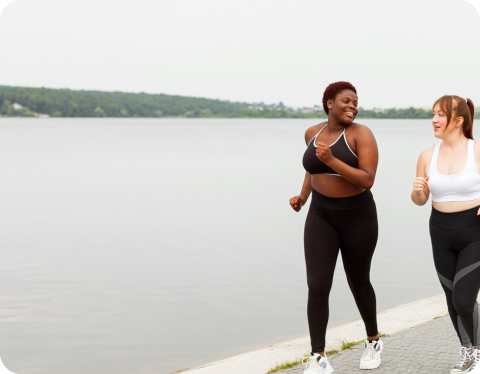
If you’re new to exercise, walking, swimming, running and cycling are great options. Walking is easy to do and requires little to no gear, and swimming is easy on the joints because it’s impact-free, making it ideal for avoiding or recovering from injury. Running is a good form of cardio because it can help raise your metabolic rate for around 14 hours afterwards, meaning your body will still be in fat-burning mode even after you’ve finished.1 And lastly, cycling — like swimming — is a good form of cardio that’s easy on the joints. You can do it outdoors or on a stationary bike indoors, and it can burn anywhere between 400 and 700 calories per hour. 2

Remember to build up gradually. It’s not recommended to jump straight into regular, high-intensity cardio when you’re new to it – it’s likely you’ll significantly raise your risk of injury and tire yourself out. Look for online plans — like a couch to 5km — that outline how to gradually increase your fitness levels while helping you avoid injury.

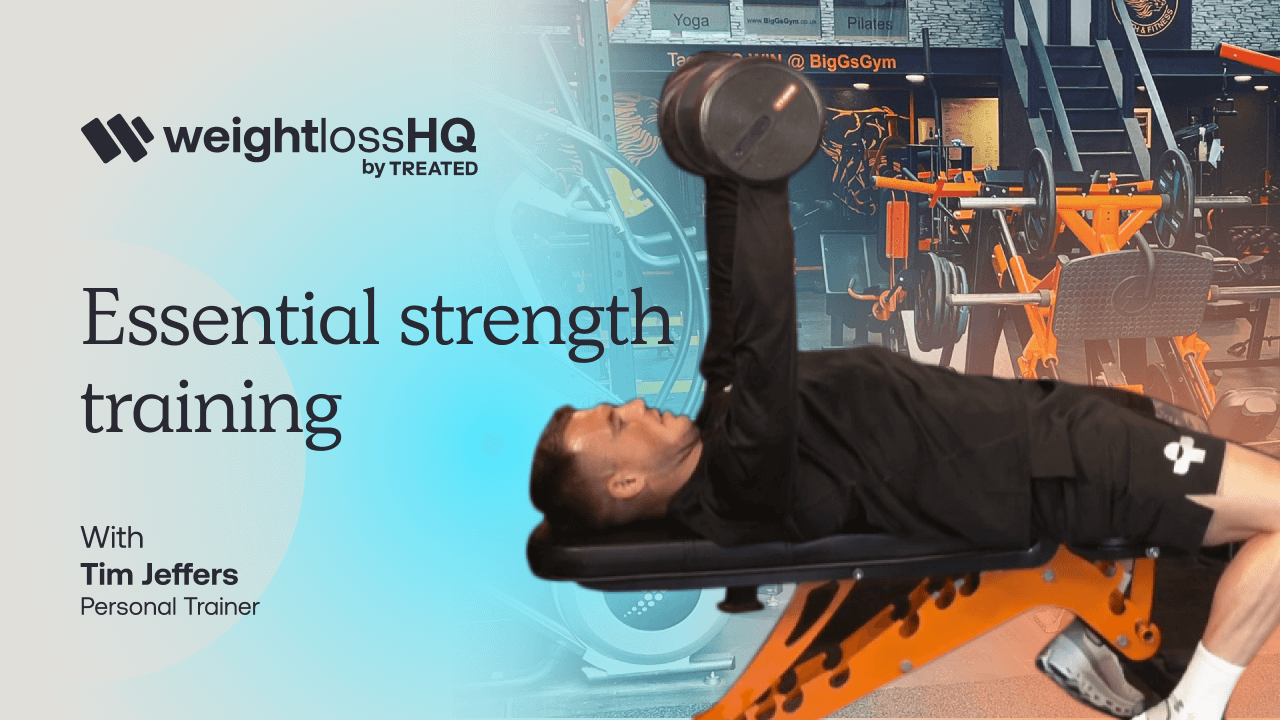
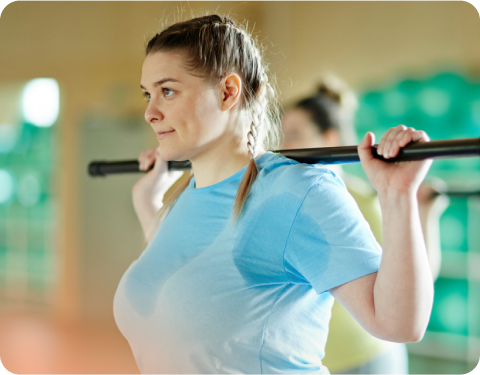
When incorporating strength training, know that it’s not just about lifting weights. Any resistance will do. So you can do push ups, use resistance bands or — if you fancy it — lift some dumbbells to work your muscles. Strength training is good because it helps build muscle mass, which both burns calories and improves your metabolism over time. It can also help strengthen your bones and joints, too, reducing your risk of injury.

Can you lose weight without exercising?

You can, but incorporating exercise into your weight loss plan will help you keep it off for good.

That’s because when you have overweight or obesity, you tend to have increased muscle mass to help you manage the excess weight. And when you lose weight, this muscle mass decreases too. So what people often find is that the weight comes off easily at first, while they have a higher basal metabolic rate, but will likely hit a plateau without exercise as their metabolism decreases significantly. 3

And it’s important to remember that good health is about more than just weight loss. Regular exercise has been shown to be beneficial for reducing the risk of heart disease, type 2 diabetes, depression, dementia and more.4 So in order to improve your health and wellbeing in the best way possible, a combination of healthy eating and exercise is the right way to go.

Do you need to join a gym to exercise properly?

No, not at all. Our research showed that some weight loss injection users didn’t join a gym because these environments made them feel anxious, while others felt they were too expensive. But the good news is that there are plenty of ways to exercise from home, or with little-to-no equipment. So you can tailor your exercise to however you feel comfortable or able.

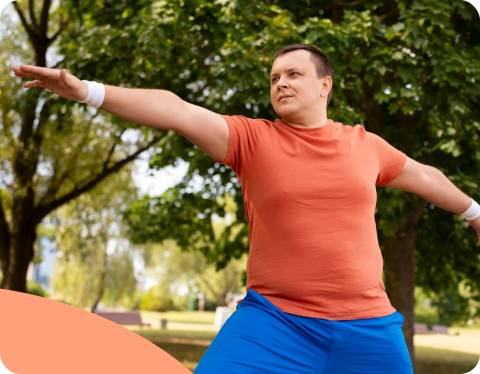
Walking and jogging are cardio activities that you can do with only a decent pair of shoes and suitable clothing, and you can do body-weight exercises, like push ups and sit ups, from the comfort of your living room. You can also follow Youtube tutorials for HIIT activities or low-impact exercises like yoga. So you’ve got a lot of options to choose from.

But there’s no hiding from the fact that a good gym membership does open up a few more exercise opportunities for you, so it’s well-worth considering if you want to change things up or try something new.

How do I avoid injury while exercising?

To avoid injury while exercising, make sure you build up gradually, by starting with low intensity exercises and giving yourself some rest days. As you become more accustomed to your routine, you can start to increase your exercise intensity and duration to keep increasing your fitness.

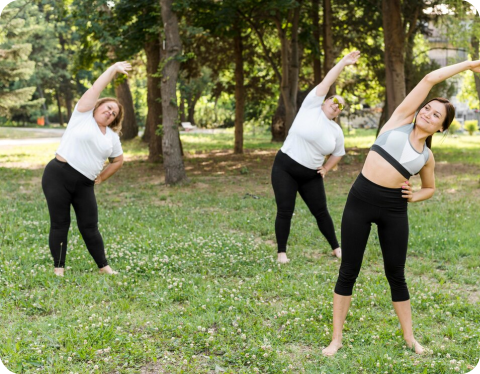
It’s also important to always do a proper warm-up with dynamic stretches to raise your heart rate and loosen your muscles and joints. And then, after exercising, round off with a decent cool-down. This can include some long, static stretches and a gentle jog or walk at the end of high intensity cardio to help remove lactic acid and reduce next-day soreness.

Treated trusted sources:
  1. KNAB, A.M., SHANELY, R.A., CORBIN, K.D., JIN, F., SHA, W. and NIEMAN, D.C. (2011). A 45-Minute Vigorous Exercise Bout Increases Metabolic Rate for 14 Hours. Medicine & Science in Sports & Exercise, 43(9), pp.1643–1648.
  2. Harvard Health Publishing (2021). Calories burned in 30 minutes of leisure and routine activities. [online] Harvard Health.
  3. Cox, C.E. (2017). Role of Physical Activity for Weight Loss and Weight Maintenance. Diabetes Spectrum, [online] 30(3), pp.157–160.
  4. NHS (2021). Benefits of Exercise. [online] NHS.

We’ve got it all covered.

All the knowledge you need is here. Browse our expert guides on exercising, cooking and eating to lose weight.

Diet info

Diet info

All the dietary info you need to optimise your journey. Expert knowledge and guidance backed by science.

Explore
Extra resources

Extra resources

Additional (but no less important) resources to help you achieve your goals.

Explore
Glossary

Glossary

All the technical jargon, explained.

Explore

Join Weight Loss HQ.

Get curated advice and tailored support.
Take our free quiz to begin your journey.