
How to target specific areas when exercising
Targeted exercises for key body parts: Your definitive guide.
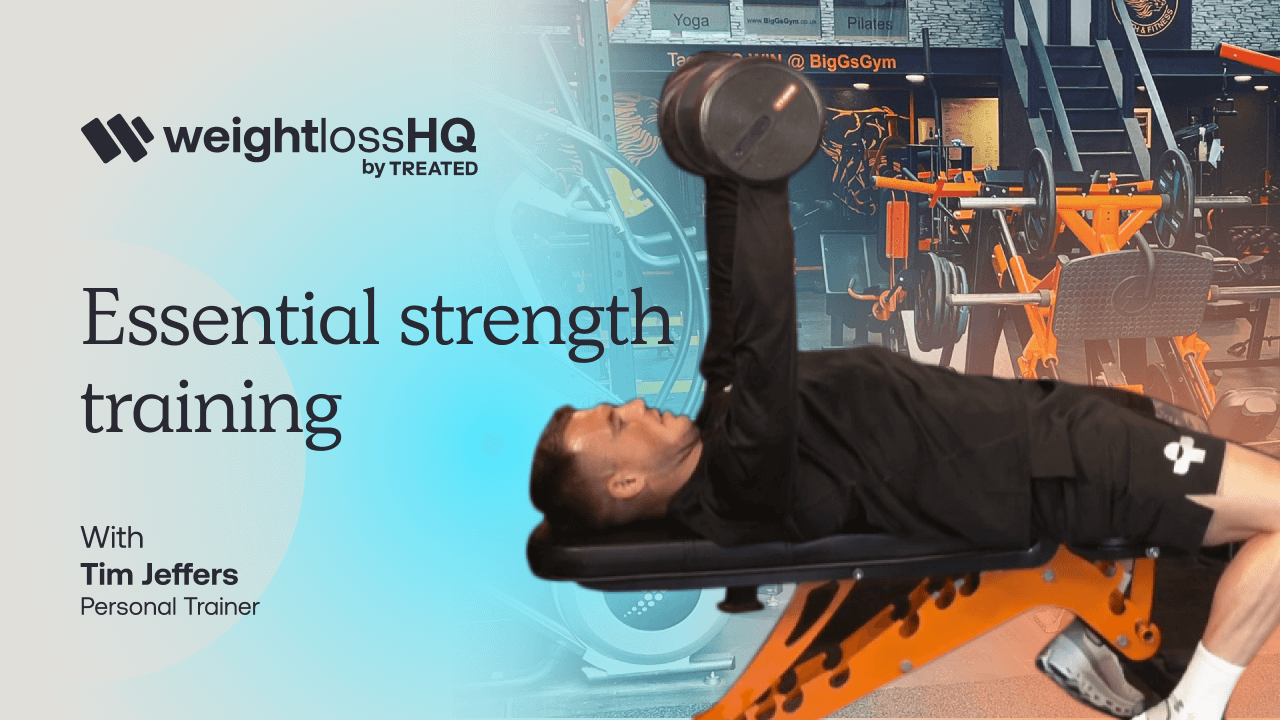
We’ve explained elsewhere how using weight loss medication can lead to the loss of both fat and muscle mass – the latter of which can cause a loss of strength. This is why strength training exercises are so important when using weight loss treatment because they can help to maintain and even increase muscle mass that you’re at risk of losing.
For newcomers to exercise, it’s good to start with compound movements that work more than one set of muscles at a time. But as you become more comfortable and experienced with exercise, your aims might adjust slightly, and you might want to focus on developing muscle in specific areas of your body.
In this article, we’ve put together a series of workouts that target the seven primary muscle groups, along with instructions on how to perform them with the right form.
Chest
Chest muscles help stabilise your shoulders and reduce the risk of shoulder injury. They’re important for everyday activities, like pushing doors open, lifting items from the floor, and even more dexterous activities like cooking and cleaning. 1
Push-up
Push-ups work your core muscles, triceps (arm muscles), deltoids (the muscles that move the arms forward), and pectoral muscles (the muscles in front of the upper chest). They’re great for upper body strength and building your core. And since they don’t need any special equipment, push-ups can be done in the comfort of your home.
To perform a push-up:
- Get down on all fours with your hands shoulder-width apart and your feet hip-width apart.
- Make sure to keep your arms tucked in.
- Stabilise your core and keep your body straight from your heels to your neck.
- Bend your elbows and lower your chest towards the floor while inhaling.
- Push yourself back up while exhaling.
- Repeat steps 4-5 for however many reps (and sets) you want to do.
If you find it hard to perform a traditional push-up, you can modify it by performing a half push-up, also known as knee push-up. This is easier as you don’t have to support your full body weight.
Modifications
Easy:
Knee push-ups
Wall push-ups
Hard:
One handed push-up
Knee push-up:
- Kneel on the floor.
- Place your hands shoulder-width apart.
- Stabilise your core and keep your body straight from your glutes to your chest.
- Bend your elbows and lower your chest towards the floor while inhaling.
- Push yourself back up while exhaling.
- Repeat this for your desired reps and sets.
Chest press machine
The chest press machine is great for building your chest muscles, which are the muscles in front of the upper chest (also known as your pectoral muscles or pecs). It also helps build your biceps (arm muscles), deltoids (shoulder muscles), and latissimus dorsi (the muscles on the sides of your back).
To use the chest press machine:
- Hold the handles with a full grip, placing your thumb and fingers around the handle.
- Keep your wrist in line with your forearms.
- Push outward while exhaling, making sure your arms are fully extended.
- Hold the position for a couple of seconds.
- Bend your elbows back to the starting position, while inhaling.
- Repeat this for your desired number of reps and sets.
Back
The back muscles are one of the most important muscle groups in the body. Strong back muscles are essential for the movement of your shoulders and neck, stabilising your spine and supporting good posture. Back exercises can lower your risk of back pain and increase flexibility, allowing for better mobility when twisting and bending. 2
Kettlebell swings
Although the main focus for kettlebell swings is your glutes, hamstring and core, the hip movement can help strengthen your back muscles too. It’s also a high-intensity workout that can burn a lot of calories in a short amount of time.
This movement can be done as part of a home workout but will require a kettlebell.
To perform a kettlebell swing:
- Bend your knees slightly. Don’t lock your knees, keep them soft.
- Your torso should be leaning forward at a 45-degree angle while keeping your back straight.
- Hold the kettlebell with two hands firmly between your legs.
- Swing the kettlebell forward while exhaling. Your arms should be fully extended and the swing should reach the top of your chest. You should be standing upright in this position.
- Swing the kettlebell back down between your legs while inhaling.
- Repeat steps 4-5 for your desired number of reps and sets.
If you feel pain in your back or shoulders when doing this movement, it could be that your form isn’t correct. You shouldn’t feel your arms actively lifting the weight, but rather supporting the kettlebell. So before continuing with the workout, follow the steps described here to ensure good form and prevent injury.
Modifications
Easy:
Use a lighter weight or swing to a lower height
Hard:
Perform one-handed swings
Lat pull-downs
This is a simple exercise you can do at the gym. It primarily works the back muscles, including the latissimus dorsi, which is the largest back muscle. It’s great for posture and stability.
To use the lat pull machine:
- Hold the wide grip bar while seated upright.
- Pull the bar down using your shoulders while exhaling.
- Continue pulling until your elbows are in line with your torso.
- Slowly return to the starting position while inhaling.
- Repeat this for however many reps and sets you want to do.
Barbell bent over row
A barbell bent over a row works four of your back muscles: the trapezius, latissimus dorsi, rhomboids and deltoids. This movement is great for strengthening and stretching your back.
- Keep your feet shoulder-width apart.
- Bend your knee slightly.
- Your torso should lean forward at a 45-degree angle and your back should be kept straight. The key is to maintain a flat back throughout the movement to protect your spine.
- Grasp onto the barbell with both hands.
- Keep your feet firm and pull the barbell up by bending your elbows. You should hold your breath when lifting.
- While exhaling, lower the weight back down. The weight shouldn’t touch the ground but hover just between your knee and ankles.
- Repeat steps 5-6 for however many reps and sets you want to do.
Before lifting, take a deep breath. This will help stabilise your core and spine. Additionally, when lifting, keep the muscles in your back engaged (don’t relax them) as this will help to prevent injury.
Shoulders
Shoulders have the greatest range of movement in the body, helping us with actions like pushing, pulling, carrying, and lifting. It’s crucial to exercise your shoulder muscles, so they can support these movements effectively.
Push-ups
Push-ups work your deltoid muscles, which are located in your shoulders and are used to raise your arms away from your body.
To perform a push-up see the method described in the chest section.
Cable face pull
The cable face pull machine mainly works the deltoid muscles, but can strengthen the rhomboids and rotator cuffs, two muscles that assist in shoulder stability.
To use the cable face pull machine:
- Fix the rope attachment to the cable machine.
- Take the rope in a neutral grip (palms facing each other).
- Stand shoulder width apart.
- Pull the rope towards your face while exhaling. Keep your elbows pointed up and to the side.
- Hold the position for a few seconds.
- Return to the starting position while inhaling.
- Repeat steps 4-6 for however many reps and sets you want to do.
Seated Dumbbell Press
This move uses the deltoids, triceps and pectorals. It requires dumbbells so you can replicate it at home without any big gym equipment. If you don’t have dumbbells you can substitute them with household items you can comfortably lift with one hand, such as canned items, bags of rice, milk jugs or a filled water bottle.
- Sit on a bench that’s 90 degrees. If you’re at home you can use a sturdy chair.
- Pick up the dumbbells with neutral grips and place them on your knees.
- Lift the dumbbells towards your shoulders. Your hands should be facing forward with the dumbbells horizontal to your ear.
- With your feet planted firmly on the ground, exhale and push the dumbbells upwards until your arms are fully extended overhead.
- While inhaling, slowly lower the dumbbells back to the starting position.
- Repeat steps 4-5 for however many reps and sets you want to do.
Modifications
Easy:
Perform the exercise standing up for core engagement.
Arms
Strong upper body muscles are essential for everyday activities, and your arms play a significant role in upper body strength. Lots of exercises that rely on arm strength, including push-ups, pull-downs, rows, kettlebell swings, and cable machine pulls.
The biceps and triceps tend to be the most commonly talked about arm muscles when it comes to workouts, but there are actually 24 arm muscles in total. And when building arm strength, it’s essential to incorporate multiple workouts that target different muscles.3 By doing so, you can engage these muscle groups from various angles, which helps to build mobility and strength.
Twisted dumbbell curls
Twisted dumbbell curls work two main muscles: the biceps and brachioradialis, a muscle in your forearm.
To perform a curl:
- Hold a dumbbell in each hand and rest them at your sides.
- While twisting your wrist, lift one dumbbell towards your chest by bending your elbow.
- Slowly return it to the starting position.
- Repeat the movement with the other arm.
- Repeat this for however many reps and sets you want to do.
Diamond press-up
Diamond press-ups are a great workout to target the triceps, while also targeting the core, pecs and deltoids, and are similar to a regular push-up. The key difference is in the placement of your arms and hands.
To perform a diamond push-up:
- Get into a plank position with your feet hip-width apart.
- Place your hands on the ground in front of your chest.
- Position your hands so the thumbs and index finger touch together to form a diamond shape.
- Keep your arms close to your body.
- Stabilise your core and keep your body straight from the heels to the neck.
- Bend your elbows and lower your chest towards the floor while inhaling.
- Push yourself back up while exhaling.
- Repeat steps 6-8 for your desired number of reps and sets.
Modifications
Easy:
Perform diamond knee push-ups
Hard:
Elevate your feet for decline push-ups
Wrist extension
Our wrists are a common site of injury, with 25% of sports injuries involving the wrist or hand.4 Strengthening your wrist with movements like wrist extensions can help lower the risk of injury.
- Sit in a chair with your arms placed on a flat surface, such as a table.
- Hang your wrists off the edge of the table.
- Hold a weight in your hands and gently bend your wrists upwards, lifting as high as possible.
- Slowly lower your hands back down.
- Repeat for the desired number of reps and sets.
Core
Nearly every movement you do during physical activity engages your core, whether you’re vacuuming the floor or tidying up your room. Even sitting in a chair with good posture needs a stable core. A weak core can destabilise your body, leading to imbalances that may result in back pain and fatigue. One indicator of a weak core is difficulty standing without resting on a wall or chair. So, if you find that you get tired too easily when waiting in line, you likely have a weak core.
Your core consists of three main parts: the pelvis, lower back, and abdomen.
Plank
Planking is one of the simplest core exercises you can do. It improves body stability, posture, and strengthens your core muscles.
To perform a plank:
- Place your toes on the floor.
- Rest your arms on the ground.
- Lift your body. Try to keep your back straight and tense your abs and glutes.
- Hold the position for at least 30 seconds. Increase the time you hold it for once you’re comfortable.
When you feel you’ve mastered the plank, there are modifications you can do to make it harder and further increase your core strength, such as the straight-arm plank. Similar to the traditional plank, but instead of the forearms resting on the ground, the arms are extended straight, making it one of the hardest plank variations.
Modifications
Easy:
Knee planks
Hard:
Elevate feet for decline plank
Add movement, like lifting your legs alternatively
Flutter kicks
Flutter kicks primarily work the abs but can help build the quads, glutes, and thighs.
To perform flutter kicks:
- Lie on your back with your arms straight at the side of your body.
- Lift your head, neck, and shoulders slightly off the ground.
- Keep your legs straight and raise them together at a 45-degree angle.
- While keeping your core engaged, lower one leg close to the floor.
- Slowly lift the leg to the starting position.
- Repeat on the other leg.
- Repeat steps 4-6 for your desired number of reps and sets.
Modifications
Easy:
Perform the kicks with your hands under your bottom.
Hard:
Add weight by holding a kettlebell or weight plate above your chest.
Russian twists
Russian twists target your abdomen, helping to tone your waist and burn stomach fat. This movement also works your lower back muscles, which can help to prevent lower back pain.
To perform a Russian twist:
- Sit on the floor with your knees bent and your feet raised slightly off the ground.
- Lean back, angling your body 45 degrees backward. Your torso and leg should form a right angle (90-degree angle).
- Link your hands together and move your arms from one side of your body to the other.
- Repeat for your desired number of reps and sets.
Modifications
Easy:
Perform it with feet on the ground
Hard:
Add weight by holding a kettlebell.
Legs
Your legs play a vital role in almost all activities and, as you age, they can become weaker. Leg exercises can keep them strong and help you stay mobile.
The main muscles in your legs are the quads, glutes, and calves. When working your legs, try to incorporate different workouts to target different muscles.
Kettlebell swings
Kettlebell swings are a great all-rounder workout. They primarily focus on the glutes, hamstrings, and abdomen. There’s a detailed method for this movement included in the ‘Back’ section of this page.
Seated leg press
The leg press machine is a simple exercise to do at the gym. It works your quads, glutes and hamstring.
To use the seated leg press machine:
- Adjust the seat on the leg press machine so your knees are at a 90-degree angle.
- Place both feet on the plate shoulder-width apart.
- While exhaling, push your legs. When your legs are fully extended, don’t lock your knees.
- While inhaling, slowly return to the starting position.
- Repeat for your desired number of reps and sets.
To make it easier, you can hold onto the sidebars for support.
Modifications
Hard:
Perform single-leg presses.
Standing calf raises
Standing calf raises are a simple workout that helps build your lower leg and ankle muscles. This improves your ankle mobility and can prevent injury.
To do a standing calf raise:
- Stand straight and keep your hands together.
- Raise your heels slowly so you stand on your toes.
- Hold the position for a second or two.
- Lower your heels back to the ground.
- Repeat for your desired number of reps and sets.
Modifications
Easy:
Use a wall or chair for support
Glutes
Glute muscles are found in the buttocks. They’re made up of three main muscles: gluteus maximus, gluteus medius, and gluteus minimus. The glutes are one of the largest muscle groups in the body and are essential for movement and rotation. Weak glutes can increase your risk of injury, make other exercise movements more difficult and reduce hip stability. 5
Squats
Squats are one of the most common exercises for glutes. This exercise targets your gluteus muscles, hamstrings, calves, quads and more. To do a traditional squat:
- Stand with your feet hip-width apart. Your toes should be facing slightly outwards.
- Bend your knees until your elbow touches your knee. Keep your chest upright so you don’t curve your back and risk injury.
- Hold the position for a couple of seconds then return to the starting position.
- Repeat for your desired number of reps and sets.
Modifications
Easy:
Perform chair squats or wall squats
Hold onto a chair for stability
Hard:
Add weight
Romanian deadlift
The Romanian deadlift is an effective workout to build your hamstring, gluteus maximus, adductors and erector spinae (core muscles). The lift is an easier deadlift variation, but can take practice to get the correct form.
- Place the barbell in front of you.
- Stand shoulder width apart.
- Grab the barbell with an overhand grip.
- While tightening your glutes, lift the weight until your thigh.
- Gently lower the weight till around your shin, keeping a flat back and with your core still engaged.
- Repeat steps 4-5 for your desired number of reps and sets.
Warm up and cool down
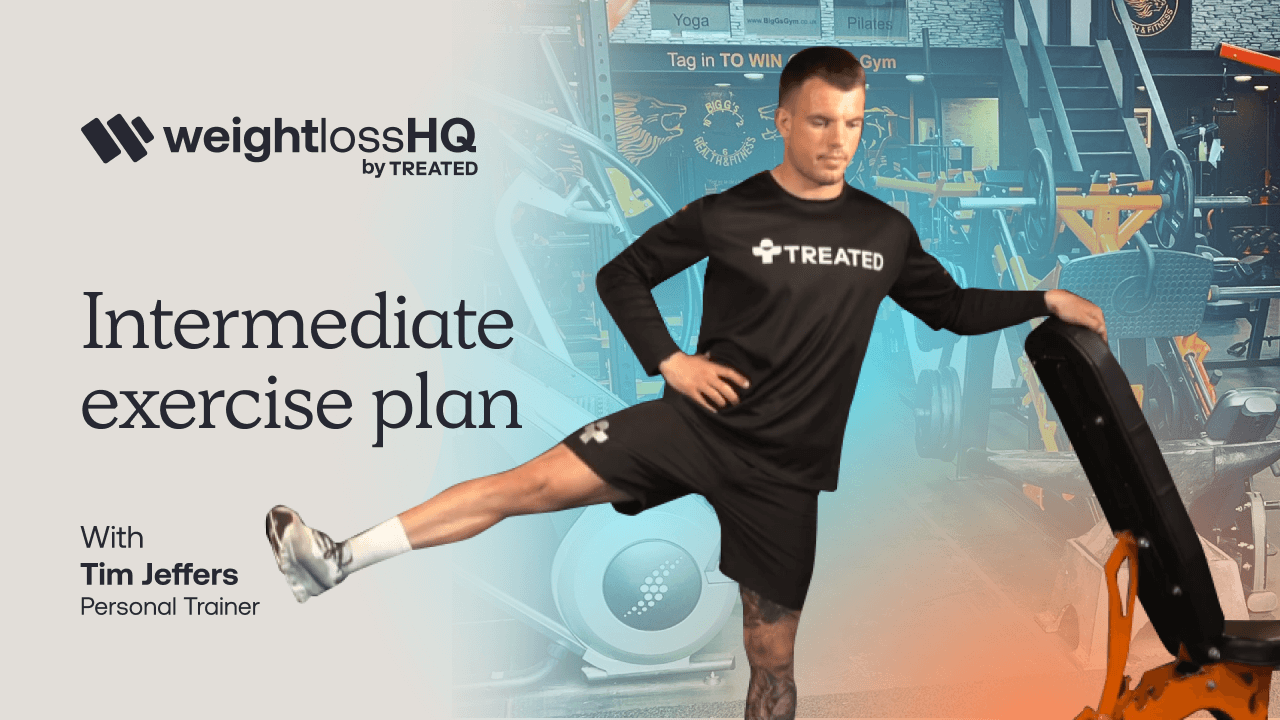
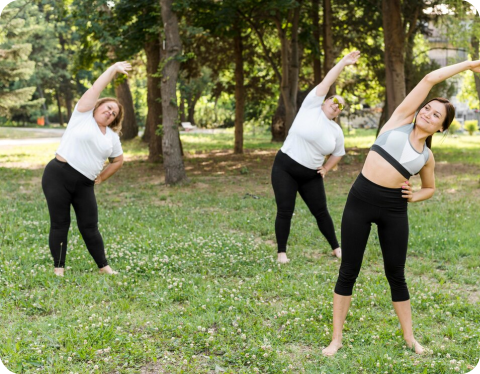
A warm-up prepares the body mentally and physically for the workout ahead. It raises body temperature, increases heart rate and reduces muscle stiffness.6 This can help to ensure a smooth workout and reduce the risk of workout-related injuries. 7 Incorporating dynamic stretches for warm-ups, involving movements like leg swings, can help improve flexibility and balance to prevent workout-related injuries.
You’ve got plenty of warm-up options, but here is an example of a simple routine:
- Arm and leg swings: for 2 minutes, swing your arms and legs in circles to loosen up.
- High knees: for 2 minutes, run in place with your knees high.
- Bodyweight lunges: for 1 minute, step forward into a lunge, alternating legs.
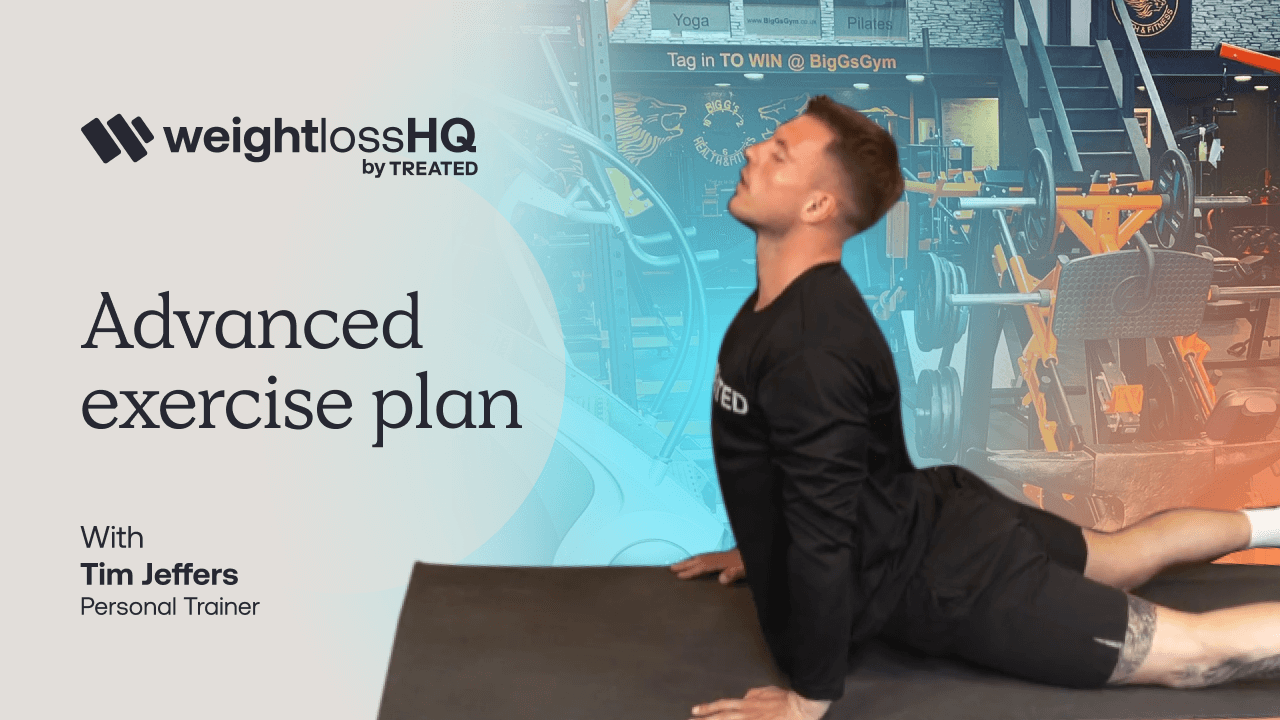
Similarly, cool-down sessions are essential. Stopping suddenly can lead to lightheadedness if you have a dramatic drop in heart rate. Cooling down allows your body to recover after a workout and helps remove toxic products that might have built up during the session, such as lactic acid and carbon dioxide. Static stretching is beneficial for cooling down as it involves stretches without movement, like the cobra stretch. This helps remove excess lactic acid, which can lead to muscle stiffness
Some cool-down activities include:
- Deep lunges: perform extra deep lunges to stretch the hip flexors and legs.
- Downward dog: keep your hands and feet on the ground, hips up, forming an inverted “V” shape. Keep your arms and legs straight, heels down.
- Brisk walking: walking as fast as you can without ever taking both feet off the floor, for 5 to 10 minutes.
Creating a workout plan
Exercising without a plan can lead to unsatisfactory results if you don’t set milestones and goals. You might be less likely to keep the plan up if you don’t have structured targets to motivate you.
Although you can find plans online, with some websites even offering personalised workout routines, creating your own can be empowering. Here are some steps to help you do it:
Identify your goals: setting specifics fosters motivation and can help track your progress. Using SMART goal planning is a functional method to create your goals. It stands for:
Specific – a goal that’s clearly defined and focused on what you want to achieve.
Measurable – trackable so you can monitor your progress.
Attainable – realistic and achievable within your means.
Relevant – aligns with your wider plan, values and ambitions.
Time-bound – given a specific timeframe for completion.
For example: ‘aiming to lose half a stone in a month by exercising four times a week in the gym, coupled with a focus on increasing muscle mass’. Tracking your progress with weekly weight checks aligns with the wider plan of losing six stones in a year.
Select a variety of exercises: this mainly applies to gym and home workout sessions. Choose a variety of exercises to target muscle groups including the chest, shoulders, back, arms, legs, and abs. While it can seem overwhelming, many workouts target multiple muscles at once. For instance, kettlebell swings and burpees work out various muscle groups.
Determine reps and sets: Reps are the number of times you perform an exercise in a row without taking a break. For example, if you do 10 push-ups before taking a break that means you’ve completed 10 reps of push-ups. Sets are a group of consecutive reps. So if you do 10 push-ups, then take a break and do another 10, you’ve completed two sets of push-ups.
The amount of reps and sets you do will differ for each exercise and how easy or difficult you want your routine to be. Before a workout, it’s best to find out your capacity for each exercise, so you can incorporate it into the workout plan. As you progress, adjust the number of reps or make it more challenging by adding weight or resistance.
Schedule workouts: plan what days you’ll complete each workout. For instant, if you’re planning to workout four days a week focusing on arms, core and legs, you can structure your week accordingly:
Day 1: Arms and core
Day 2: Rest
Day 3: Legs
Day 4: Rest
Day 5: Arms and core
Day 6: Legs
Day 7: Rest
Having rest days is as important as having active days. It allows your body to recover and rebuild muscle. Rest days can also help you avoid burnout and over-exhaustion. You should also get plenty of sleep every night, as this will help you recover.
Track your progress: monitoring progress can help with motivation and allow adjustments to be made. You can use a fitness journal, notes or apps to help track your progress.
Mindful eating: while weight loss medications might suppress your appetite, it’s good to maintain a well-balanced diet and keep hydrated. This will have a positive impact on your fitness journey.
Keeping on track
The amount of information to absorb can feel overwhelming, so here’s a summary of the key points we’ve covered:
- Workouts: Choosing several workouts for each muscle group can diversify your routine for optimum muscle building.
- Proper form: Having the correct form decreases the risk of injury and optimises workout effectiveness.
- Rest days – Incorporating rest days in between workouts allows your body to rest and rebuild muscle.
- Plan: Establishing a plan can help with workout consistency and track your progress.
If it’s your first time exercising, or have underlying health conditions, it’s important to consult with a doctor or fitness professional before starting a new exercise program.
- Restivo, J. (2024). Chest workouts: Exercises for strength and function. [online] Harvard Health.
- Restivo, J. (2024). Effective exercises for building a strong back. [online] Harvard Health.
- Barakat, C., Barroso, R., Alvarez, M., Rauch, J., Miller, N., & De Souza, E. O. (2019). The Effects of Varying Glenohumeral Joint Angle on Acute Volume Load, Muscle Activation, Swelling, and Echo-Intensity on the Biceps Brachii in Resistance-Trained Individuals. Sports, 7(9), 204.
- Rodner, C. M., & Edgar, C. M. (2016). Sports-related wrist and hand injuries: A review. Journal of Orthopaedic Surgery and Research, 11.
- Elzanie A, Borger J. Anatomy, Bony Pelvis and Lower Limb, Gluteus Maximus Muscle. [Updated 2023 Apr 1]. In: StatPearls [Internet]. Treasure Island (FL): StatPearls Publishing; 2024 Jan-.
- Park, K., Jung, K., Park, E., Lee, Y., Jee, S., Eun, D., Cha, Y., & Yoo, J. (2018). The effect of warm-ups with stretching on the isokinetic moments of collegiate men. Journal of Exercise Rehabilitation, 14(1), 78-82.
- Soligard T, Myklebust G, Steffen K, Holme I, Silvers H, Bizzini M, Junge A, Dvorak J, Bahr R, Andersen TE. Comprehensive warm-up programme to prevent injuries in young female footballers: cluster randomised controlled trial.
When we present you with stats, data, opinion or a consensus, we’ll tell you where this came from. And we’ll only present data as clinically reliable if it’s come from a reputable source, such as a state or government-funded health body, a peer-reviewed medical journal, or a recognised analytics or data body. Read more in our editorial policy.
Share your thoughts.
Was this info helpful?