
Keeping it up: exercise as part of your lifestyle
Maintaining your exercise routine. Tips for sustained change and progress.

Regular exercise has plenty of health benefits. It can reduce your risk of heart disease, diabetes and stroke, while helping to improve your mood and regulate your sleep pattern.[1]
Combined with a treatment like Saxenda or Wegovy, a regular exercise programme is a great way of reaching your target weight. But it’s not just about that. Increasing your activity levels is a lifestyle choice with long-term health benefits.
As your fitness improves, your energy levels and all-round motivation should also get a boost. The more workouts you do, the more it will feel like part of your normal schedule.
So how far should you push yourself? Ultimately this comes down to you and where you want to get to. If you feel comfortable with both beginner and intermediate exercise routines and wondering what comes next, it might be time to test your limits and try a workout that’s even more challenging.
Exercises to challenge you
Most workout plans involve a variety of movements designed to build your muscle mass and core strength while improving endurance. Advanced workouts are more of the same, but they also incorporate exercises that are more intense and, often, more complex.
If you’ve used dumbbells before, you can introduce a kettlebell to your routine to add more weight. Advanced movements should feel more challenging than ones you’re used to because you’ll be working different muscle groups, and sometimes several at the same time.
As always, form is key. Being ready to take more on doesn’t mean you need to dive right into the routines. You’re taking things up a notch but, like the steps you’ve made going from beginner movements to more advanced ones, you still need to be mindful of overdoing it or causing an injury.
High impact workout
We’ve collabed with professional rugby player and fitness coach Tim Jeffers to bring you a series of workouts to try at home.
If you’ve made it through the beginner and intermediate routines, first and foremost — well done. Hopefully you’re feeling better both physically and mentally, and your body will be better placed to take things to the next level.
Like our other videos, this advanced programme involves readying yourself beforehand, and cooling down at the end of the session. Because the circuit movements are more advanced, expect dynamic stretches that prepare you for doing multiple reps.
Aim to complete this routine five days a week, and make each session last between 30-50 minutes. You won’t get as many rest days as you’re used to, but you should need less time to recover the stronger and fitter you become.
For equipment, you’ll need dumbbells, a kettlebell and a mat. The frequency and challenge of the circuits should be enough to keep building muscle without straining you too much, so only use weights you can comfortably do 10-15 reps with before you consider changing them.
Your warmup
Because you’re doing advanced exercises, this warmup reflects that. It’ll get your blood pumping while activating the muscles you’re about to use.
- Start with 2 minutes of high knees. High knees is a great all-round warmup because it activates your calves, hip flexors and glutes at the same time. It’s as straightforward as it sounds — stand with your feet as wide as your hips. Then, at a running pace, lift your knees high towards your chest in a continuous movement, alternating legs.
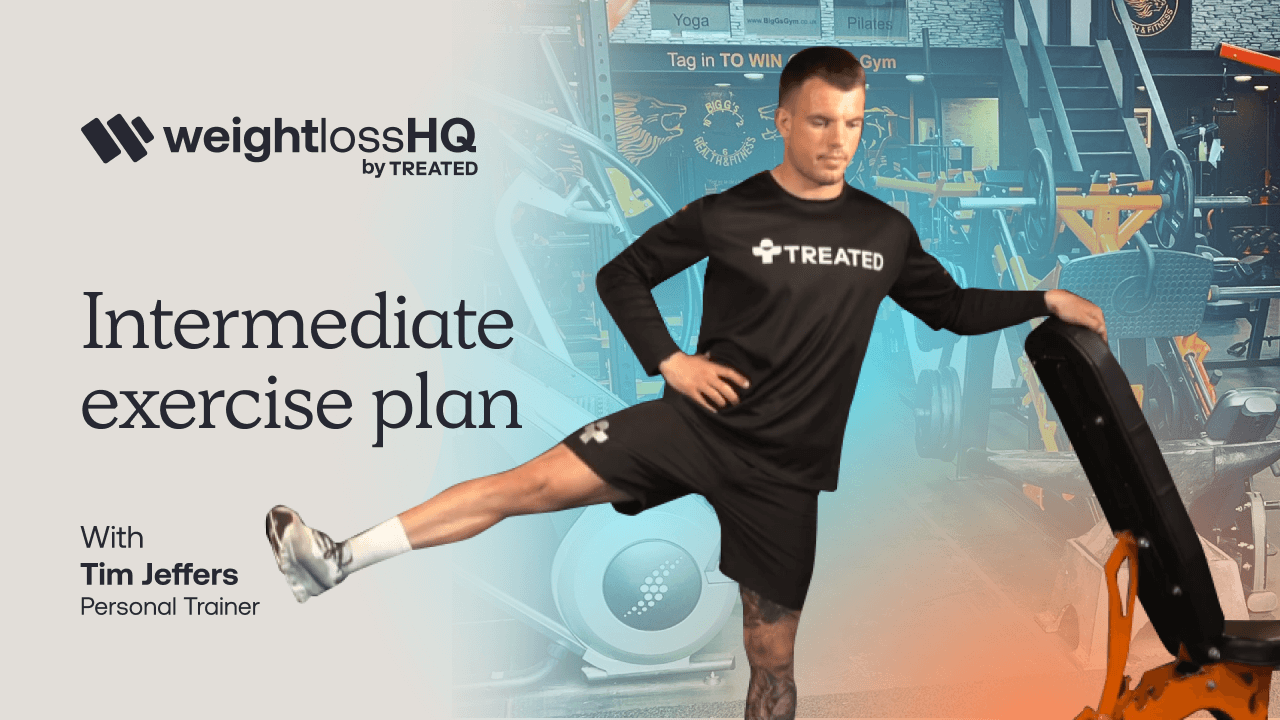
- Next, you’re going to complete 2 minutes of arm and leg swings. Be mindful of keeping a neutral posture as you swing your arms and legs dynamically to loosen them up. Try to swing them in a controlled way, and relax your breathing at the same time.
- Now for a minute of bodyweight lunges. First, stand in a neutral position with your feet together. Take a large step forward and sink into a lunge, with your back knee almost touching the floor. Use your front leg to push yourself back up, and switch sides.
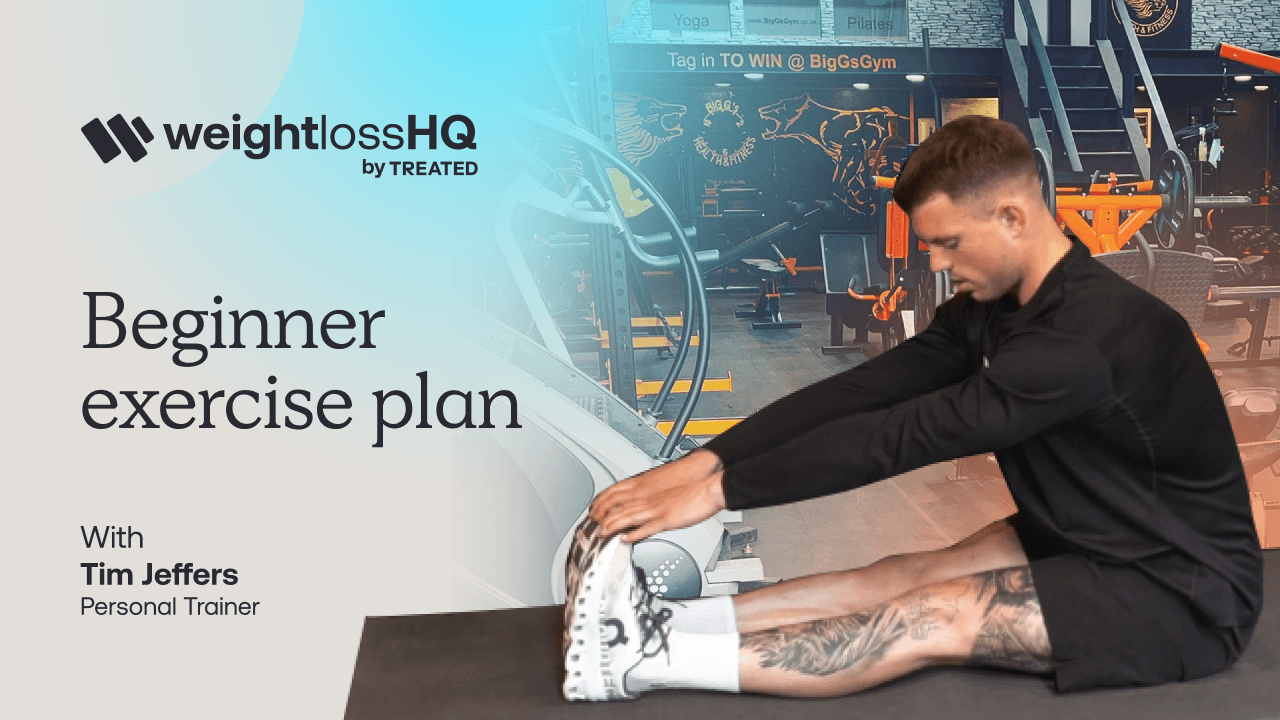
- To finish, do some dynamic stretches. Include arm circles, leg swings and torso twists, and make sure to extend through your full range of motion as you stretch.
Your workout
Try to repeat this circuit 3 times, and then move up to 4 times once you’re more confident with it.
1. Jump squats
You’re now ready to start your exercises. First of all, you’re going to do 12-15 reps of jump squats.
The idea here is to do an explosive move. Start by keeping your chest open. Your feet should be just outside your shoulders, facing outwards slightly. Squat down by bending your knees as far as you can, and then spring up through your toes.
2. Push ups
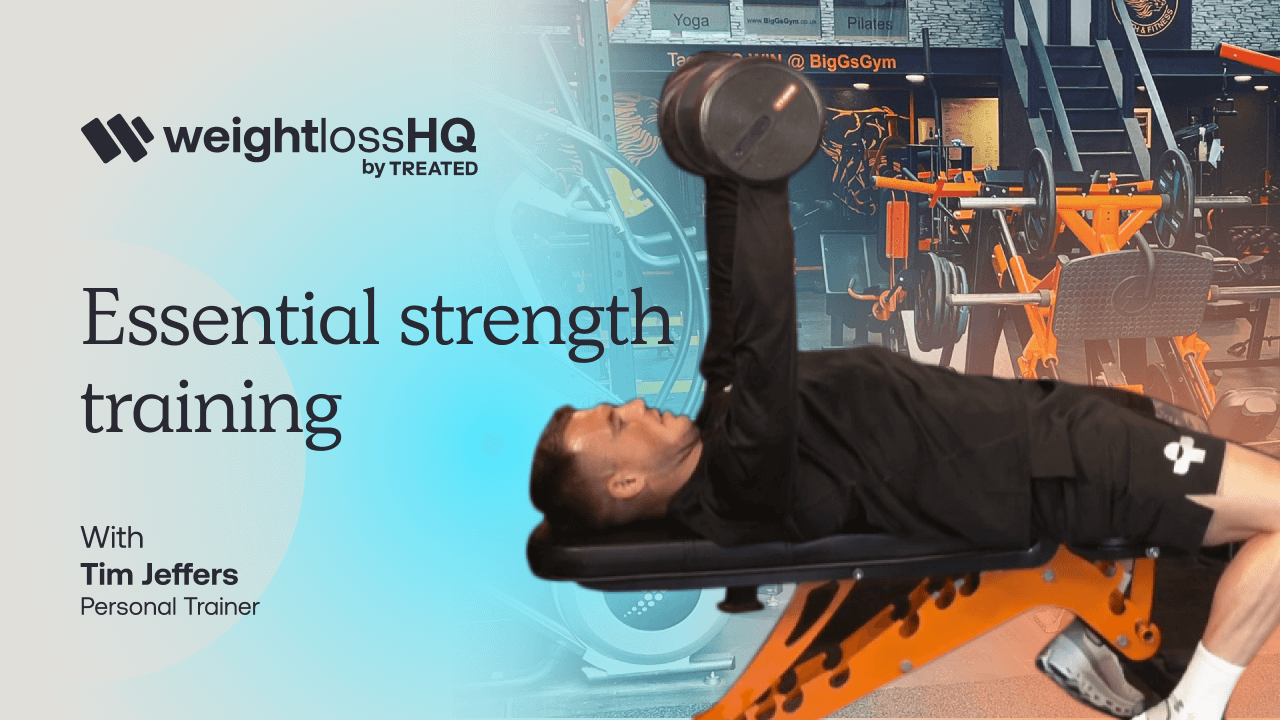
Next up, do 12-15 push-ups. Push ups are great for your arms and chest, and most people are familiar with them. They can be easy to do incorrectly, though, so make sure to think about the quality of the push-up as you do it.
On your mat, get onto your knees and put your hands in front of your shoulders. Keeping your upper body straight, lower your chest to the floor, then push yourself back up to your starting position.
3. Dumbbell lunges
These work your quadriceps and your glutes. If you’ve not used dumbbells before, use a weight you think you’ll be comfortable doing multiple reps with.
Holding the dumbbells by your sides, then step forward with one leg. Lunge down, keeping your dumbbells by your side, and let your back knee almost touch the ground. Push yourself back up, and change legs.
Do 10 reps per leg.
4. Renegade rows
Next, you’re going to do another exercise involving your dumbbells: renegade rows.
This is a stabilising exercise that works your upper body, biceps and back.
Place your dumbbells in front of you, and hold them in a plank position. Using one arm at a time, row the weight backwards.
Do 8-10 reps per arm.
5. Kettlebell swings
If you have a kettlebell, you can try this next exercise. Another great all-rounder, it can burn calories quickly while working your shoulders, hamstrings and quads.
Stand over your kettlebell with your feet hip-width apart. Half-squatting, grab the weight and let it drop between your legs.
Swing the kettlebell up to your chest. When it reaches chest height, swing it back down between your legs into a half-squat.
Try 15-20 reps, and always be mindful when doing a heavy lift.
6. Burpees
The final exercise of this advanced workout: burpees.
These work your entire body using only your own weight, and they’re great for building strength and endurance.
Start in a standing position with your feet shoulder-width apart, and drop into a squat. Drive your legs back into a plank, then lower yourself towards the ground. Next, push yourself up into a squat, and from there, jump straight up in the air. The idea is to perform the move in a fluid sequence. Do 10-12 reps.
Your cool down
It’s been a challenging programme, so a huge well done for making it through. Like the other workouts, we started with a warm up and we’ll end with a cool down.
It can be tempting to skip this part, especially if you’re busy. It’s worth making time for, though, as it can influence how you feel in the hours and days after a session. Aim to do this routine for around 7-10 minutes.
- First up is the deep lunge. Lunge forward with one leg facing forward, keeping your at a 90 degree angle. Keep your other leg under your hip, bent slightly. Hold it until you feel a deep stretch, then switch legs.
- Next up are some yoga positions, starting with the downward dog. This move helps elongate your spine while stretching the backs of your legs. With your hands and feet on the ground, raise your hips to form an inverted “V” shape. Hold it for as long as you can.
- After that, we’re doing the pigeon pose. This movement opens your hips, while stretching your back, groin and thighs. Get on all fours on your mat. Slide one knee forward towards your wrist, and extend your other leg backwards. Keeping your torso upright, lower your hips to the ground. You’ll feel the stretch in your front hip.
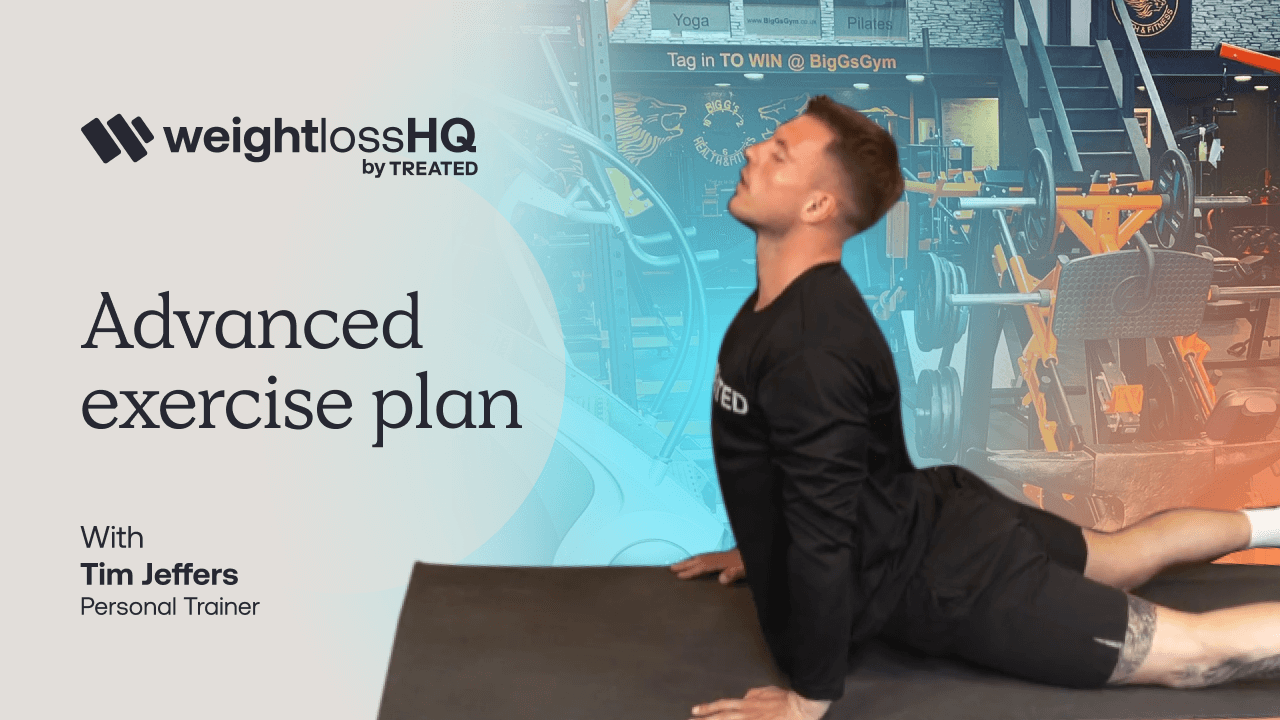
- Finish your cool down with the cobra pose. This stretch works your whole upper body. Start by placing your palms on the ground, beneath your shoulders as you lie face-down on your mat. Tuck your elbows into your sides, and anchor your pubic bone towards the floor. Inhale and lift your chest up while rolling your shoulders back. Your legs should be doing most of the heavy lifting, allowing you to gently extend upwards.
Staying safe whilst keeping fit
While exercising regularly is a positive step towards better health and improved fitness, it’s important to stay safe if you plan on challenging yourself with advanced workouts. Warming up and cooling down can help your recovery after sessions, and can help you avoid picking up an injury.
Returning to exercise after an injury can be a slow and often difficult process[2] It usually means a period of no exercise before gradually starting some light activity. In one study of sports-related injuries in adolescent athletes, the most commonly affected areas were the ankles, knees, and shoulders. Among the reasons listed for picking up injuries were not warming up properly and an inappropriate training load, which is the cumulative amount of exercise you’re doing.[3]
As well as starting and ending circuits the right way, you can adapt workouts to suit you if there are some poses or exercises that you know you’re not capable of. If something doesn’t feel right, don’t force it.
Keeping it up
The changes you make throughout your weight loss journey can be permanent if you’re enjoying your new lifestyle and feel motivated to keep it up. As you progress through different levels of exercises, fitness and better health can feel an upwards curve where things are constantly improving.
With that in mind, it’s important to be realistic if you reach a point where your weight plateaus. When you’re used to seeing your weight constantly coming down, a period where it levels out can take its toll on you mentally.[4] If this happens, go easy on yourself about where you’re up to. Try to remember the effort you’ve put in to get to where you are, and don’t give yourself a hard time if you feel like it’s time for a break.
The occasional slip up won’t affect your weight loss goals when you’re making lasting, long-term changes. If you feel like you’re in a period where finding motivation is a struggle, look at doing some gentle exercise that can help keep things ticking over until you’re ready to get going again.
- NHS Choices. “Benefits of Exercise – Exercise.” NHS, 2020.
- Kraemer, William, et al. “Recovery from Injury in Sport: Considerations in the Transition from Medical Care to Performance Care.” Sports Health: A Multidisciplinary Approach, vol. 1, no. 5, Sept. 2009, pp. 392–395.
- Prieto-González, Pablo, et al. “Epidemiology of Sports-Related Injuries and Associated Risk Factors in Adolescent Athletes: An Injury Surveillance.” International Journal of Environmental Research and Public Health, vol. 18, no. 9.
- Sarwan, Gurpreet, and Anis Rehman. “Management of Weight Loss Plateau.” PubMed, StatPearls Publishing, 2024.
When we present you with stats, data, opinion or a consensus, we’ll tell you where this came from. And we’ll only present data as clinically reliable if it’s come from a reputable source, such as a state or government-funded health body, a peer-reviewed medical journal, or a recognised analytics or data body. Read more in our editorial policy.
Share your thoughts.
Was this info helpful?