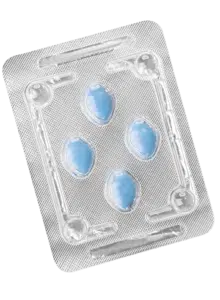
What is Valtrex?
Valtrex is a branded medicine containing the active ingredient valaciclovir. It’s an oral antiviral tablet that’s used to treat and suppress genital herpes. It works by stopping the herpes virus from multiplying and helps your immune system clear your infection more quickly.
It can be taken as a short course during outbreaks, or used as ongoing suppressive therapy if you have frequent or severe recurrences. Suppressive therapy has also been shown to reduce the risk of transmission to a partner.[1][2]
How does Valtrex work for genital herpes?
Valtrex works by interfering with how the virus replicates in your DNA. Valaciclovir, the active ingredient in Valtrex, is converted in the body to acyclovir. This works to slow the virus reproduction down and also helps to limit the severity and duration of herpes outbreaks.[1]
It doesn’t cure herpes, but when taken at the first sign of an outbreak, it can shorten the time it takes to heal.
Will I get side effects using Valtrex?
Valtrex is generally well tolerated, but some people might get side effects. The most common ones are headache, nausea, dizziness, diarrhea, skin sensitivity to sunlight, itch, rash, and abdominal pain.
If you’re concerned about side effects or experience anything persistent or unusual, let a clinician know.
What doses of Valtrex are there?
Valtrex comes in 500 mg and 1 g tablets. The dose you take might change depending on whether you’re treating an outbreak or using it for long-term prevention.
Treated trusted source:
- Martens, M.G., Fife, K.H., Leone, P.A., Dix, L.P. and Brennan, C.A. (2009). Once Daily Valacyclovir for Reducing Viral Shedding in Subjects Newly Diagnosed with Genital Herpes. Infectious Diseases in Obstetrics and Gynecology, 2009, pp.1–7.
- Reitano, M., Tyring, S., Lang, W., Thoming, C., Worm, A. ‐M., Borelli, S., Chambers, L.O., Robinson, J.M. and Corey, L. (1998). Valaciclovir for the Suppression of Recurrent Genital Herpes Simplex Virus Infection: A Large‐Scale Dose Range‐Finding Study. The Journal of Infectious Diseases, 178(3), pp.603–610.
How we source info.
When we present you with stats, data, opinion or a consensus, we’ll tell you where this came from. And we’ll only present data as clinically reliable if it’s come from a reputable source, such as a state or government-funded health body, a peer-reviewed medical journal, or a recognised analytics or data body. Read more in our editorial policy.