

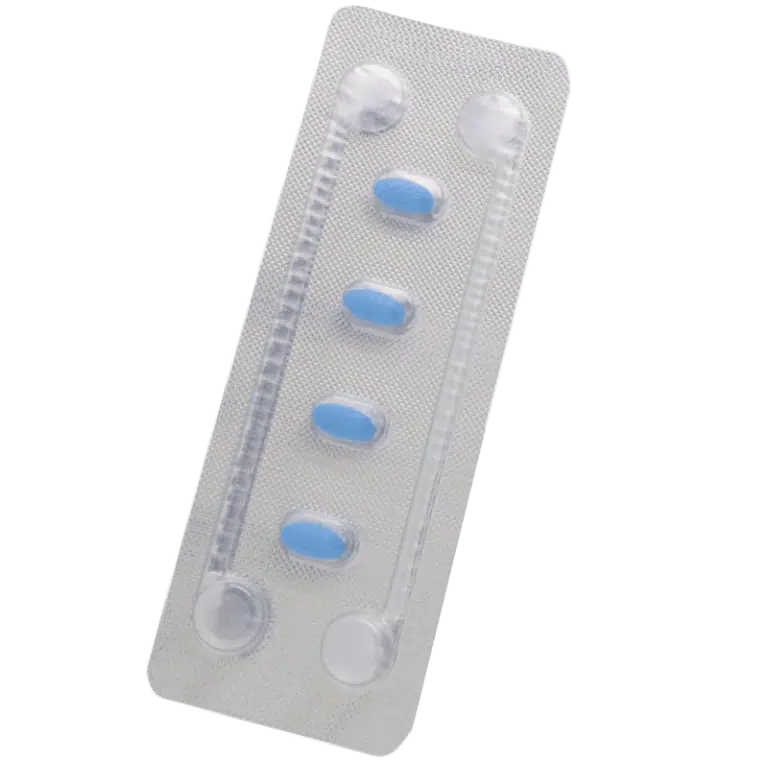



Terconazole is a prescription antifungal medication that comes in cream and vaginal suppository form. It’s used to treat vaginal yeast infections, which can cause itching, burning especially when you urinate, and vaginal discharge that’s usually white and clumpy (often likened to cottage cheese).
Terconazole is highly effective and works quickly, with treatment usually lasting 3 to 7 days. U.S. studies found that the 0.4% cream cleared infections in 77% to 91% of cases. The 80mg suppository had similar success, clearing infections in 80% to 85% of users.[1]
It also can help to lower the risk of reinfection, with most people staying infection-free for at least a month after treatment.[1]
How does Terconazole work?
Terconazole works by stopping the growth of the yeast causing vaginal infections, most commonly Candida albicans. It does this by targeting sterol synthesis, a key component of the yeast’s cell membrane. More specifically, Terconazole inhibits an enzyme called 14-alpha-demethylase that’s needed for the production of sterols. Without enough of these molecules, the fungal cell membrane becomes unstable, its structure and functions are disrupted, and this ultimately stops the yeast from growing.[2]
What forms does Terconazole come in?
Terconazole comes in two forms: a cream that contains either 0.4% or 0.8% terconazole, and a suppository that contains 80mg of terconazole. They’re both used once daily at bedtime and are typically applied intravaginally for three days in a row.
Treated trusted source:
Weisberg, M. (1989).Terconazole–a new antifungal agent for vulvovaginal candidiasis. Clinical therapeutics, 11(5), pp.659–68.
Isaacson, D.M., et al. (1988).Selective inhibition of 14α-desmethyl sterol synthesis in Candida albicans by terconazole, a new triazole antimycotic. Journal of Antimicrobial Chemotherapy, 21(3), pp.333–343.
This page was written by The Treated Content Team.
This page was medically reviewed by Dr. Joseph Palumbo on February 20, 2025. Next review due on February 20, 2028.
How we source info.
When we present you with stats, data, opinion or a consensus, we’ll tell you where this came from. And we’ll only present data as clinically reliable if it’s come from a reputable source, such as a state or government-funded health body, a peer-reviewed medical journal, or a recognised analytics or data body. Read more in our editorial policy.
TerconazoleTerconazole
How to Use Terconazole
Terconazole is used once daily at bedtime for 3 or 7 days, as prescribed by your doctor.
As with any other medication, you should follow the instructions that come with your treatment, but typically you’ll use Terconazole in the ways described below.
If you’re using Terconazole vaginal cream:
Wash your hands before and after each application.
Remove the cap from the cream tube.
Prepare the applicator that comes with the cream by attaching it to the tube, squeeze the tube to fill the applicator, and then remove the applicator from the tube.
Lie on your back with your knees bent.
Insert the applicator high into your vagina and push the plunger to release the cream.
Remove the applicator gently.
If you’re using Terconazole vaginal suppository:
Wash your hands.
Unwrap the suppository.
If you’re not using an applicator, lie on your back with your knees bent toward your upper body, and gently push the suppository with your fingertip into your vagina as far as you can.
If you’re using the applicator, put the flat side of the suppository into the open end of the applicator. Lie on your back with your knees bent, gently insert the applicator deep into your vagina, and press the plunger to release the suppository. Gently remove the applicator afterward.Â
After using the applicator, remove the plunger and clean both parts with warm water and soap.
If this treatment comes into contact with your eyes, rinse them well with cool tap water.
You may also want to consider wearing a mini-pad or sanitary napkin to avoid getting the medicine on your clothes. Tampons aren’t recommended, as they can absorb the medication.
Even if you start feeling better, make sure to finish the full course as prescribed. And don’t worry if your period starts during treatment. It won’t affect how the medication works, so you should keep going as usual.
How long does it take for Terconazole to work?
Terconazole starts working against the yeast that’s causing your infection pretty quickly and reaches its highest levels in your bloodstream five to 10 hours after using it.[1] But you might not notice an improvement in your symptoms for one to two days.[2] Even if you start feeling better before finishing the treatment, make sure to complete the entire prescribed course.
How long does Terconazole stay in your system?
It can vary from person to person. Most of the dose (over 60%) stays in the vagina, while only about 20% enters the bloodstream. However, it takes between 6.4 to 8.5 hours for the level of terconazole in the blood to drop by half.[1]
Slavin, M.B., et al. (1992).Single dose oral fluconazole vs intravaginal terconazole in treatment of Candida vaginitis. Comparison and pilot study. The Journal of the Florida Medical Association, 79(10), pp.693–6.
This page was written by The Treated Content Team.
This page was medically reviewed by Dr. Joseph Palumbo on February 20, 2025. Next review due on February 20, 2028.
How we source info.
When we present you with stats, data, opinion or a consensus, we’ll tell you where this came from. And we’ll only present data as clinically reliable if it’s come from a reputable source, such as a state or government-funded health body, a peer-reviewed medical journal, or a recognised analytics or data body. Read more in our editorial policy.
TerconazoleTerconazole
Terconazole isn’t suitable for everyone, and there are some things that you need to be aware of when using it.
Here’s all the official info on it. If anything is unclear, let our physician know, and they can talk with you about it.
Have something specific you want to know? Search our info below, or ask our experts a question if you can’t find what you’re looking for.
What alternatives are there to Terconazole?
Answer:
There are several alternatives to Terconazole for treating vaginal yeast infections, including miconazole and fluconazole.
Miconazole (brand name Monistat) is available as both a prescription and over-the-counter treatment. It comes as a cream and suppository, and is effective for treating mild to moderate infections. It’s applied intravaginally once or twice a day for one, three or seven days. Some people have reported side effects like burning or itching, but it’s generally well tolerated.
Fluconazole, on the other hand, is a prescription antifungal medication taken by mouth. It’s often prescribed for more severe infections and is usually taken as a single 150 mg oral dose. It works throughout your entire body, unlike topical treatments such as Terconazole.
When comparing these treatments, all three are effective for treating yeast infections, but the choice of treatment depends on the severity of your infection and your preferences. Fluconazole is particularly convenient as a single-dose oral treatment, while Miconazole and Terconazole are applied topically. Miconazole and Terconazole are often preferred for those who want localized treatment, while Fluconazole may be recommended for more severe or recurring infections.
In clinical trials, the 0.4% terconazole cream seemed to perform better than the 2.0% miconazole nitrate in terms of symptom relief (87.9% vs 81.3%) and caused fewer genital side effects. [1] Terconazole also had a higher mycologic cure rate at 100%, compared to 75% for miconazole. People using terconazole started feeling better in about 1.8 days, while fluconazole took an average of 2.4 days, while complete relief of symptoms took about 6.6 days with terconazole and 6.08 days with fluconazole. [2]
Can you get Terconazole over the counter?
Answer:
No, you’ll need a prescription from your doctor for both the cream and suppository. This is because Terconazole is not suitable for everyone, and a doctor needs to make sure it’s the right treatment for your infection.
Does Terconazole have side effects?
Answer:
In clinical studies, the most common side effects linked to terconazole were headache and pain in the genital area. Other side effects, like burning, body pain, fever, and chills, were reported, but they weren’t significantly more common than with a placebo. The side effects that most often led to the discontinuation of terconazole were burning and itching.[3]
Can I use the bathroom after inserting Terconazole?
Answer:
You can still pass urine after using terconazole, but it’s a good idea to go to the bathroom beforehand. Then, apply the cream or suppository while lying down before bed. It's best to stay lying down after using it, as standing up could cause the medicine to leak.
Can you have intercourse while on Terconazole?
Answer:
It’s best to avoid sex until you’ve finished your treatment, as it can be painful and may make symptoms worse or slow down the healing. If you choose to have sex though, your partner should use a barrier contraception (like a condom) to help prevent spreading the infection.
If you’ve had unprotected sex while having a vaginal yeast infection, there’s a chance your partner could have been exposed and may need treatment as well.
Is Terconazole safe in pregnancy?
Answer:
Generally yes, but you should always check with your doctor first. Since some of the medication gets absorbed into the body, it’s usually not recommended during the first trimester unless your doctor believes it’s absolutely necessary. In the second and third trimesters, Terconazole may be used if the benefits outweigh any potential risks to the baby.
Slavin, M.B., et al. (1992).Single dose oral fluconazole vs intravaginal terconazole in treatment of Candida vaginitis. Comparison and pilot study. The Journal of the Florida Medical Association, 79(10), pp.693–6.
Our experts continually monitor new findings in health and medicine, and we update our articles when new info becomes available.
Feb 19, 2025
Published by: The Treated Content Team.Medically reviewed by: Dr. Joseph Palumbo, Senior Medical Adviser
How we source info.
When we present you with stats, data, opinion or a consensus, we’ll tell you where this came from. And we’ll only present data as clinically reliable if it’s come from a reputable source, such as a state or government-funded health body, a peer-reviewed medical journal, or a recognised analytics or data body. Read more in our editorial policy.
This is healthcare on your terms.
All from the comfort of your device. Get access to what you need, when you need it.
100% online
Ask questions and get expert recommendations, at the touch of a button.
Tailored choices
We'll narrow down some treatments for you to choose from based on your medical profile.
Secure shipping
Receive your treatment by express delivery, in discreet packaging.
Easy automatic refills
Set your own delivery schedule and pause or make changes any time you like.
We're making healthcare more about you. Sign up to our newsletter for personalised health articles that make a difference.
Disclaimer: The information provided on this page is not a substitute for professional medical advice, diagnosis, or treatment. If you have any questions or concerns about your health, please talk to a doctor.
Dr. Joseph Palumbo
Senior Medical Adviser
Joseph joined Treated in 2023, and is one of the lead doctors providing prescribing services for the platform.
When we present you with stats, data, opinion or a consensus, we’ll tell you where this came from. And we’ll only present data as clinically reliable if it’s come from a reputable source, such as a state or government-funded health body, a peer-reviewed medical journal, or a recognised analytics or data body. Read more in our editorial policy.
Reviews you can trust
All of our reviews are collected from real patients after their treatment has been delivered.
We publish reviews collected through independent platforms including Reviews.io and Trustpilot.