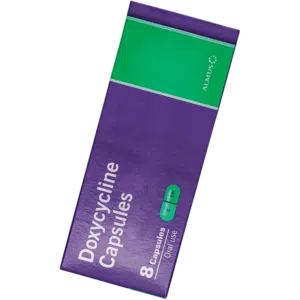
Doxycycline is a powerful antibiotic that fights bacterial acne and helps calm underlying inflammation. It’s used to treat lots of infections, but it’s very effective against breakouts caused by bacterial acne.
It comes as a capsule you take every day. This means it could be a good option for you if you have sensitive skin, or if creams or gels haven’t worked. It’s much stronger than a lot of topicals (creams or gels) and works across your whole system.
How does Doxycycline work for acne?
Doxycycline is a type of antibiotic called a tetracycline. It works by binding to the cells in the bacteria that cause acne, stopping them from making new proteins. This kills off the bad bacteria and stops them from growing. So it’s an effective way of fighting bacterial acne.
Doxycycline also helps with acne by bringing down inflammation. It does this by stopping inflammatory cells from being made and released. Inflammation is a major cause of bacterial acne, so Doxycycline’s anti-inflammatory effects stop it at its source.[1] This should help reduce redness and inflammation caused by acne breakouts.
What doses of Doxycycline are there?
The usual recommended dose for acne is 50 mg of Doxycycline once a day. Always take the dose recommended by your doctor. Don’t change it, or stop taking the medication, without talking to them first, even if your acne has cleared up.
If your current dose isn’t working for you, you might need a higher one. Our doctor can see if a bigger dose might be right for you, or if you need a different treatment.
Treated trusted source:
Graber, E., 2021. Treating acne with the tetracycline class of antibiotics: A review. Dermatological Reviews, 2(6), pp.321-330.
This page was written by The Treated Content Team.
This page was medically reviewed by Dr. Joseph Palumbo on August 28, 2024. Next review due on August 28, 2027.
How we source info.
When we present you with stats, data, opinion or a consensus, we’ll tell you where this came from. And we’ll only present data as clinically reliable if it’s come from a reputable source, such as a state or government-funded health body, a peer-reviewed medical journal, or a recognised analytics or data body. Read more in our editorial policy.
DoxycyclineDoxycycline
How to take Doxycycline
Your doctor will talk you through how to take Doxycycline before you start treatment. If you’ve got any questions, just log into your account and drop us a message.
Try to take your capsule around the same time each day. If you’re worried you’ll forget, you could set an alarm or use a reminder app on your phone.
Swallow the Doxycycline capsule whole, don’t crush or chew it.
Make sure you’re upright (sitting or standing) when you take the capsule.
Drink a large glass of water when you take your capsule.
Take Doxycycline with a meal. It helps you absorb the medicine and avoid stomach discomfort.
Try to avoid eating or drinking dairy for a couple of hours before and after you take your capsule. Dairy affects the levels of doxycycline that are active in your system.
Don’t lie down for 30 minutes after you take your Doxycycline. This stops the capsule from getting stuck in your throat, so it can move quickly into your stomach and get absorbed.
How long does it take Doxycycline to work?
Doxycycline is absorbed by the body quickly. It reaches peak levels in your blood just two to four hours after you take a capsule. So it starts fighting the bacteria and inflammation causing your symptoms pretty fast. But when you’re taking it for acne, it can take some time for the effects to start showing on your skin.
You’ll usually take it for 6-12 weeks, depending on how severe your acne is. A lot of people see improvements after just a couple of weeks, though. But, even when your skin starts looking better, you shouldn’t stop taking Doxycycline without discussing it with your doctor.
What should I do if I make a mistake while taking Doxycycline?
If you forget to take it at your usual time, just take it as soon as you remember. If there are fewer than 12 hours until your next capsule, skip the missed dose and carry on as normal. Don’t take twice your normal dose to make up for missing a capsule.
If you take too much Doxycycline, seek medical attention right away. Take the packaging of the medication with you so they can see what you’ve taken and how much. If you’ve only taken one extra capsule, it’s unlikely to cause you many problems. Even so, you should still make sure you seek help if you have any worrying symptoms.
This page was written by The Treated Content Team.
This page was medically reviewed by Dr. Joseph Palumbo on August 28, 2024. Next review due on August 28, 2027.
How we source info.
When we present you with stats, data, opinion or a consensus, we’ll tell you where this came from. And we’ll only present data as clinically reliable if it’s come from a reputable source, such as a state or government-funded health body, a peer-reviewed medical journal, or a recognised analytics or data body. Read more in our editorial policy.
DoxycyclineDoxycycline
Doxycycline isn’t suitable for everyone, and there are some things that you need to be aware of when taking it.
Here’s all the official info on it. If anything is unclear, let our clinician know, and they can talk with you about it.
DoxycyclineDoxycycline
Doxycycline: FAQ
Have something specific you want to know? Search our info below, or ask our experts a question if you can’t find what you’re looking for.
Can I drink alcohol while taking Doxycycline?
Answer:
You shouldn’t drink alcohol while you’re on Doxycycline. Wait until you’ve finished the medication and your acne has cleared up. Doxycycline may make you more sensitive to the effects of alcohol, like clumsiness and poor reflexes. [1]
Alcohol also interferes with the effects of Doxycycline. It makes it harder to fight the bacteria causing your acne and bring down inflammation. So it can interrupt your acne treatment, or make it last even longer.
How is Doxycycline different from other meds for acne?
Answer:
Unlike a lot of treatments for acne, you don’t have to apply Doxycycline straight to your skin. This can be helpful if you have sensitive skin that gets easily irritated by strong creams or ointments.
Doxycycline is also a bit different from topical drugs because it doesn’t just get rid of surface-level acne. It can also fight the root cause of acne by bringing down inflammation from within. If you’ve tried a range of topical medicines but your acne keeps coming back, Doxycycline might be the right choice for you.
Is Doxycycline similar to any other medicines?
Answer:
There are a few other antibiotic treatments for acne that are similar to Doxycycline. Minocycline is also a tetracycline antibiotic. So it works in a similar way, despite being a different drug. Everyone reacts differently to medication, so one might be better than another for you.
There are also a few branded versions of Doxycycline that can be used for acne, such as Vibramycin. They’ll all work in pretty much the same way, though, because they have the same active ingredient. The main difference is that branded medicines may have different packaging and are usually more expensive.
How effective is Doxycycline for acne?
Answer:
Doxycycline is a powerful treatment for bacterial acne. A double-blind study found a significant improvement with Doxycycline treatment over a placebo in people with moderate to severe acne. [2]
A review of the treatment of acne with Doxycycline found that it was just as effective as minocycline. But Doxycycline had a lower risk of side effects like stomach discomfort.[3] So Doxycycline is a safe and effective option if you have bacterial acne.
What are the side effects of Doxycycline?
Answer:
Doxycycline does come with a risk of side effects, just like any medicine Not everyone will get get them, but some potential side effects of of Doxycycline include:
Feeling nauseous or vomiting
Inflammation that affects the heart (pericarditis)
Heartburn
Vaginal infection
There are some more serious side effects of Doxycycline you should be aware of, too. If you get any of the following side effects, stop taking Doxycycline and seek medical assistance right away:
Sudden difficulty breathing, wheezing, chest pain, a fever, swelling in the face or mouth, rash, itching.
Loss of appetite, abdominal discomfort, persistent or bloody diarrhoea.
Fever, swollen lymph nodes, skin rash.
Severe headache and blurred, double, or loss of vision.
Widespread severe blistering.
This isn’t all of Doxycycline’s side effects. If you have any questions or concerns about side effects—or possible interactions with other medicines—take a look at the patient information or speak with your physician.
Can I take Doxycycline if I’m pregnant or breastfeeding?
Answer:
You shouldn’t take Doxycycline if you’re pregnant or breastfeeding, as we don’t know how it can affect your baby or your breast milk. If you’re planning on having a baby, or think you might be pregnant and you’re looking for acne treatment, speak to a doctor for advice.
What’s the difference between Doxycycline and hormonal acne treatment?
Answer:
Another way to treat acne with an oral tablet is with hormonal birth control, but this can only be used by women. Hormonal birth control helps acne by lowering the amount of sebum (or skin oil) you produce – which can help if you have naturally oily skin, but can also cause your face to dry out.
Hormonal treatment for acne is more of a long-term option, so it’s only really recommended if you’re already looking for contraception. Doxycycline is a shorter-term option that directly targets the bacteria and inflammation responsible for bacterial acne.
Do I need a prescription for Doxycycline?
Answer:
You can’t get Doxycycline over the counter, a doctor will have to prescribe it for you. It’s not right for everyone, so they’ll have to check over your symptoms first.
If you’re struggling with bacterial acne, just talk to us. Our doctor will look into your options and see if Doxycycline might be right for you.
Treated trusted source:
McIver, S., Muccigrosso, M. and Haydon, P., 2012. The effect of doxycycline on alcohol consumption and sensitivity: consideration for inducible transgenic mouse models. Experimental Biology and Medicine, 237(10), pp.1129-1133.
Leyden, J., 2013. A randomized, phase 2, dose-ranging study in the treatment of moderate to severe inflammatory facial acne vulgaris with doxycycline calcium. J Drugs Dermatol., 1.12(6), pp.658-63.
Kircik, Leon., 2010. Doxycycline and minocycline for the management of acne: a review of efficacy and safety with emphasis on clinical implications. J Drugs Dermatol., 9(11), pp.1407-11.
Last updated on Aug 28, 2024.
How we reviewed this page:
Our experts continually monitor new findings in health and medicine, and we update our articles when new info becomes available.
Aug 28, 2024
Published by: The Treated Content Team.Medically reviewed by: Dr. Joseph Palumbo, Senior Medical Adviser
How we source info.
When we present you with stats, data, opinion or a consensus, we’ll tell you where this came from. And we’ll only present data as clinically reliable if it’s come from a reputable source, such as a state or government-funded health body, a peer-reviewed medical journal, or a recognised analytics or data body. Read more in our editorial policy.
This is healthcare on your terms.
All from the comfort of your device. Get access to what you need, when you need it.
100% online
Ask questions and get expert recommendations, at the touch of a button.
Tailored choices
We'll narrow down some treatments for you to choose from based on your medical profile.
Secure shipping
Receive your treatment by express delivery, in discreet packaging.
Easy automatic refills
Set your own delivery schedule and pause or make changes any time you like.
We're making healthcare more about you. Sign up to our newsletter for personalised health articles that make a difference.
Disclaimer: The information provided on this page is not a substitute for professional medical advice, diagnosis, or treatment. If you have any questions or concerns about your health, please talk to a doctor.
Dr. Joseph Palumbo
Senior Medical Adviser
Joseph joined Treated in 2023, and is one of the lead doctors providing prescribing services for the platform.
When we present you with stats, data, opinion or a consensus, we’ll tell you where this came from. And we’ll only present data as clinically reliable if it’s come from a reputable source, such as a state or government-funded health body, a peer-reviewed medical journal, or a recognised analytics or data body. Read more in our editorial policy.
Reviews you can trust
All of our reviews are collected from real patients after their treatment has been delivered.
We publish reviews collected through independent platforms including Reviews.io and Trustpilot.