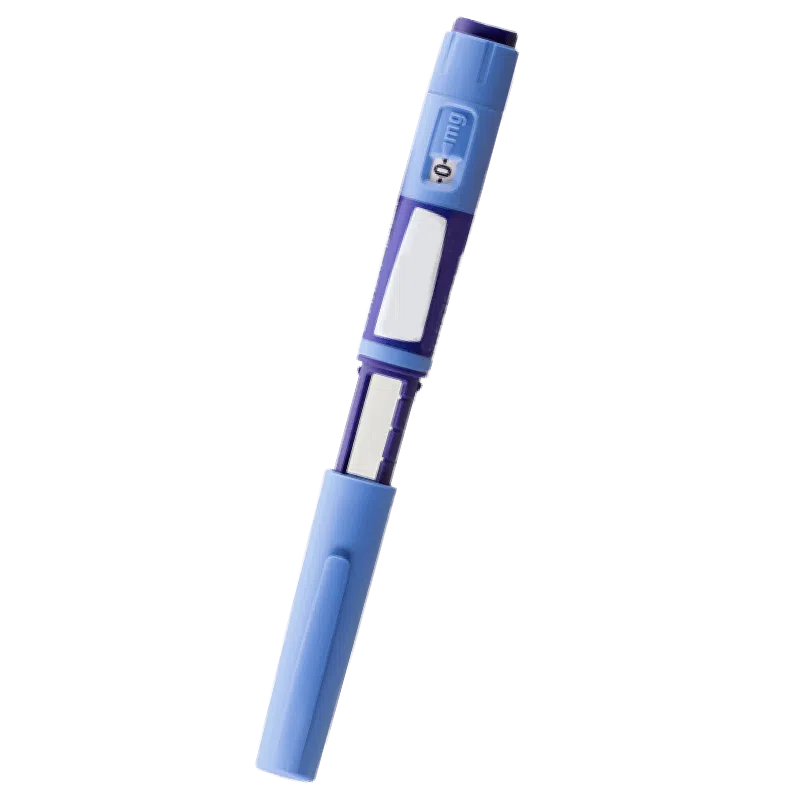
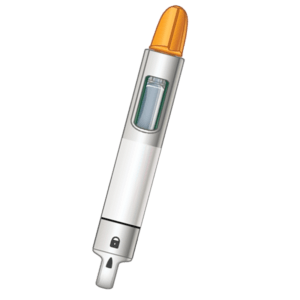
Bydureon is a pre-filled injectable treatment that helps to lower your blood sugar when you have type-2 diabetes. Bydureon is only prescribed as an add-on treatment to be used in combination with other blood sugar lowering medicines. This means that you’ll only use Bydureon if you have already tried other treatments which haven’t worked to control your blood sugar levels.
Type-2 diabetes is a condition that usually develops gradually in adulthood, as a result of you no longer producing as much insulin as you need to, or your cells losing sensitivity to insulin.
Insulin is an essential hormone for moving sugar from your blood into your cells for it to be used as energy. When your body doesn’t produce or utilise insulin correctly, high levels of glucose (sugar) build up in your bloodstream, which is called hyperglycaemia. Being hyperglycaemic for extended periods of time increases your risk of developing long-term health problems.
How does Bydureon work?
When you eat, your body releases hormones called incretins, which stimulate your pancreas to secrete insulin. Bydureon belongs to a class of medicines called GLP-1 agonists, also called ‘incretin mimetics’. This essentially means that when you use Bydureon it mimics the action of incretins – stimulating insulin secretion from your pancreas in response to food to help lower your blood sugar levels. [1]
Bydureon is a prolonged-release, long acting treatment. This means that it stays active in your system for a while after you take it. So you only have to use it once a week, and it keeps working to control your blood sugar until you use it again a week later.
What doses of Bydureon are there?
Bydureon is only available in one strength: 2mg, of which you should use only once a week. As a result, you’ll be advised to try a different or additional treatment if Bydureon isn’t providing sufficient blood sugar control for you at this strength.
Treated trusted source:
Ballav, C. and Gough, S. (2012).Bydureon: long-acting exenatide for once-weekly injection. Prescriber, [online] 23(1-2), pp.30–33.
This page was written by The Treated Content Team.
This page was medically reviewed by Dr Daniel Atkinson on January 23, 2025. Next review due on January 23, 2028.
How we source info.
When we present you with stats, data, opinion or a consensus, we’ll tell you where this came from. And we’ll only present data as clinically reliable if it’s come from a reputable source, such as a state or government-funded health body, a peer-reviewed medical journal, or a recognised analytics or data body. Read more in our editorial policy.
BydureonExenatide
How to use Bydureon
You should always use Bydureon exactly as instructed to by our doctor. If you haven’t used it before, you should be shown how to by a physician before it can be prescribed to you. Your medicine will also come with a leaflet which will give you detailed, step-by-step instructions on how to use it.
Bydureon should be stored in your fridge and injected once a week, with or without food, at any time of day. Bydureon should be injected subcutaneously (under the skin) into your stomach, upper leg or the back of your upper arm. Don’t inject it into a vein or muscle.
You can use Bydureon in the same area of your body each week, you’ll just need to choose a different injection site within that area.
To use Bydureon:
Remove one pen from your fridge and rest it on a flat surface for at least 15 minutes.
Check the expiration date.
Wash your hands and choose your injection site (stomach, thigh, or back of the upper arm).
Shake the pen vigorously for 15 seconds or more to mix the suspension
Only use the treatment if it is white to off-white, evenly mixed and cloudy
If you see white medicine on the top, sides or bottom of the window, the solution is not correctly mixed – shake it again until it is correctly mixed
Once the solution is correctly mixed, use the injection straight away by unlocking the autoinjector and unscrewing the orange cap.
To inject, push the autoinjector against your skin. You’ll hear a click when the injection begins.
Hold the autoinjector against your skin for 15 seconds to make sure you get your full dose.
Use a new pen for each injection. Throw away any used pens correctly and immediately after using them, according to the instructions of your clinician.
How long does it take Bydureon to work?
Bydureon should get to work immediately after you take it, but it will take around 6-7 weeks for it to become most effective in your system.
As type-2 diabetes doesn’t always give you obvious symptoms, you might not feel much different from taking Bydureon, but this doesn’t mean that it isn’t working to lower your blood sugar levels. You’ll need to keep taking your treatment in order to support your long-term health.
What should I do if I make a mistake when using Bydureon?
If you accidentally use more Bydureon than you should, seek medical help straight away.
If you forget to take a dose of Bydureon, you can take it when you remember – as long as it’s not less than three days until your next scheduled dose. If there’s only one or two days until your next scheduled dose then skip the missed one and continue as normal.
You could also change the day that you use it on in order to make sure you have at least a three day gap between doses. Don’t use it more than once in any three day period.
If you’re not sure whether you’ve taken the full dose of Bydureon, don’t inject another dose of the treatment. Just wait until the following week as planned.
This page was written by The Treated Content Team.
This page was medically reviewed by Dr Daniel Atkinson on January 23, 2025. Next review due on January 23, 2028.
How we source info.
When we present you with stats, data, opinion or a consensus, we’ll tell you where this came from. And we’ll only present data as clinically reliable if it’s come from a reputable source, such as a state or government-funded health body, a peer-reviewed medical journal, or a recognised analytics or data body. Read more in our editorial policy.
BydureonExenatide
Bydureon isn’t suitable for everyone, and there are some things that you need to be aware of when taking it.
Here’s all the official info on it. If anything is unclear, let our clinician know, and they can talk with you about it.
BydureonExenatide
Bydureon: FAQ
Have something specific you want to know? Search our info below, or ask our experts a question if you can’t find what you’re looking for.
How is Bydureon different from other treatments for diabetes?
Answer:
Most treatments for diabetes come in the form of daily tablets, whereas Bydureon is an injection treatment that only needs to be used once a week.
Another main distinction between diabetes treatments is their mode of action. There are a range of ‘classes’ of medicine, each of which will work in a different way to help lower your blood sugar. Some treatments help your body to use insulin better, whereas others can allow more glucose to leave your body in your urine or increase your pancreas’ insulin secretion.
Bydureon belongs to the ‘GLP-1 agonist’ class of medicines, which is one of a few different types that help your pancreas to secrete more insulin - though the exact way that they do this differs from other types of treatment.
Do I need a prescription for Bydureon?
Answer:
Yes, you need a prescription for Bydureon. This is because it’s not a suitable treatment for everyone, and a clinician is going to make sure that you know how to use it before it can be prescribed to you.
Your HbA1c (the test of your average blood sugar levels over the last 2-3 months) will also need to be monitored whilst you’re using it to make sure that it continues to be an effective treatment for you.
Is Bydureon similar to any other treatments?
Answer:
Other injectable GLP-1 agonists include: Victoza, Byetta, Ozempic, Trulicity and Rybelsus (among others). All of these treatments will work in largely the same way to lower your blood sugar, but the active ingredients they use are different. This means that you might find different treatments to be more or less suitable or effective for you based on how your body responds to them.
Some of these treatments, such as Victoza and Byetta, need to be injected daily, whereas Bydureon and Ozempic only need to be injected once a week.
Byetta and Bydureon share the same active ingredient, so the way they work in your body will be the same. The only real difference is that Bydureon contains an ‘extended release’ version of the medicine, meaning that it’ll stay active in your system for longer. Some studies have also shown the extended release form of exenatide to be more effective and less likely to cause side effects than daily exenatide.[1]
Treated trusted source:
Painter, N.A., et al. (2013).An evidence-based and practical approach to using BydureonTM in patients with type 2 diabetes. Journal of the American Board of Family Medicine: JABFM, [online] 26(2), pp.203–210.
Last updated on Jan 22, 2025.
How we reviewed this page:
Our experts continually monitor new findings in health and medicine, and we update our articles when new info becomes available.
Jan 22, 2025
Published by: The Treated Content Team.Medically reviewed by: Dr Daniel Atkinson, Clinical Reviewer
How we source info.
When we present you with stats, data, opinion or a consensus, we’ll tell you where this came from. And we’ll only present data as clinically reliable if it’s come from a reputable source, such as a state or government-funded health body, a peer-reviewed medical journal, or a recognised analytics or data body. Read more in our editorial policy.
This is healthcare on your terms.
All from the comfort of your device. Get access to what you need, when you need it.
100% online
Ask questions and get expert recommendations, at the touch of a button.
Tailored choices
We'll narrow down some treatments for you to choose from based on your medical profile.
Secure shipping
Receive your treatment by express delivery, in discreet packaging.
Easy automatic refills
Set your own delivery schedule and pause or make changes any time you like.
We're making healthcare more about you. Sign up to our newsletter for personalised health articles that make a difference.
Disclaimer: The information provided on this page is not a substitute for professional medical advice, diagnosis, or treatment. If you have any questions or concerns about your health, please talk to a doctor.
Dr Daniel Atkinson
Clinical Reviewer
Dr Daniel is a UK doctor who reviews medical content across the site to make sure it's clinically accurate. On specific pages he's reviewed you'll see his reviewer card.
When we present you with stats, data, opinion or a consensus, we’ll tell you where this came from. And we’ll only present data as clinically reliable if it’s come from a reputable source, such as a state or government-funded health body, a peer-reviewed medical journal, or a recognised analytics or data body. Read more in our editorial policy.
Reviews you can trust
All of our reviews are collected from real patients after their treatment has been delivered.
We publish reviews collected through independent platforms including Reviews.io and Trustpilot.