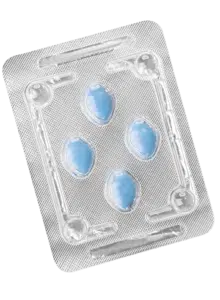
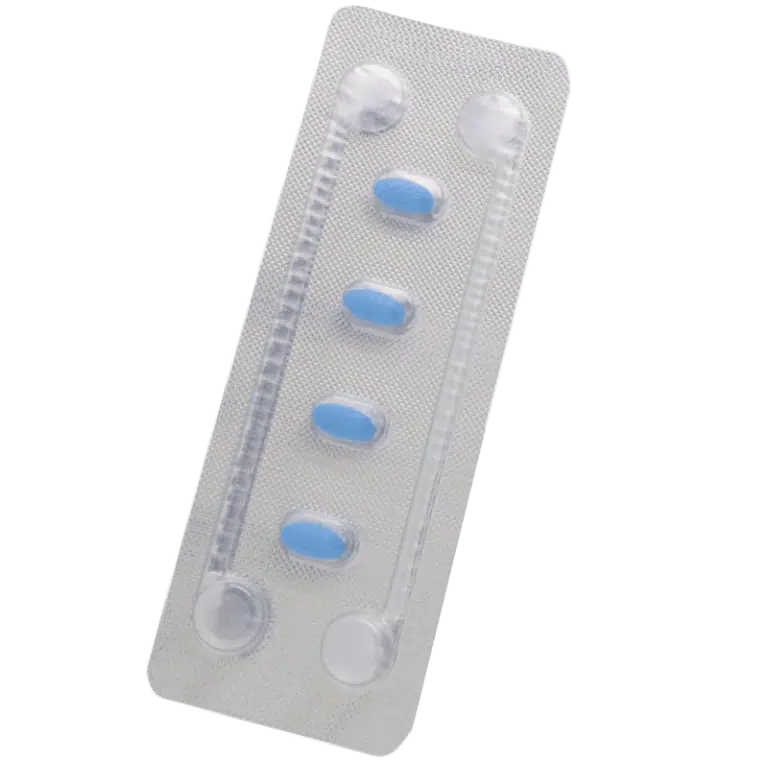
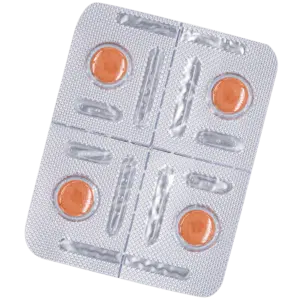
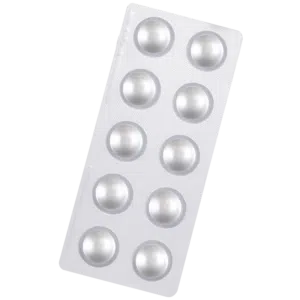
Atorvastatin tablets are used to lower high cholesterol simply, quickly and effectively. They belong to a group of medicines known as statins. You take statins if you’ve been diagnosed with high blood cholesterol, as they lower cholesterol levels. They can also reduce the risk of heart disease, like strokes and heart attacks, in patients.
Atorvastatin is a prescription-only treatment available as regular or chewable tablets. If you have a family history of heart disease, or a chronic health condition like rheumatoid arthritis or type 1 or type 2 diabetes, it may be a good treatment option for you.
How does Atorvastatin work?
Atorvastatin works in two ways to lower cholesterol. It blocks the enzyme that creates cholesterol, which prevents the liver from producing it. The reduced production of cholesterol then lowers the overall concentration of it in the blood.[1]
The second way Atorvastatin works is by helping your body reabsorb existing cholesterol. Cholesterol is needed by your body to perform certain tasks. When it’s low, your body will reabsorb cholesterol that has built up in your arteries. This normally exists as plaques that are made up of LDLs (low-density lipoprotein), which is classed as “bad” cholesterol.
What doses of Atorvastatin are there?
Atorvastatin is available in six different dosages: 10mg, 20mg, 30mg 40mg, 60mg and 80mg. The right dose for you will depend on the levels of cholesterol in your body, and a clinician can guide you on this. The typical starting dosage for adults between the ages of 18-64 years old is 20mg once a day. The dose might be lowered or increased depending on how much it reduces your cholesterol levels or causes unwanted side effects. The typical maintenance dosage for this age bracket is 10-80mg once a day.[2]
Atorvastatin has not been approved for children under the age of 10. Your dosage could be lowered once you’re over 65, as your kidneys may not function as well as they used to, which can lead to your body processing drugs at a slower rate. This may increase your risk of experiencing side effects, like headaches, nausea, diarrhea and cold-like symptoms.
Treated trusted source:
Stancu, C. and Sima, A., 2001. Statins: mechanism of action and effects. Journal of Cellular and Molecular Medicine, 5(4), pp.378-387.
This page was written by The Treated Content Team.
This page was medically reviewed by Dr. Joseph Palumbo on February 24, 2025. Next review due on February 24, 2028.
How we source info.
When we present you with stats, data, opinion or a consensus, we’ll tell you where this came from. And we’ll only present data as clinically reliable if it’s come from a reputable source, such as a state or government-funded health body, a peer-reviewed medical journal, or a recognised analytics or data body. Read more in our editorial policy.
AtorvastatinAtorvastatin
How to take Atorvastatin
You should use Atorvastatin exactly as prescribed. The oral tablet is designed as a long-term treatment and comes with risks if it’s not taken correctly. Most people will be directed to take one dose once a day in the evening, as your body produces more cholesterol at this time. It should be swallowed whole and can be taken with or without food. Don’t drink grapefruit juice before or after taking it. If possible, avoid it altogether. Grapefruit juice can affect the metabolization process of statins, which can cause you to absorb more of the medication than you should be absorbing, which can be toxic in some cases.
The instructions for each form will be the same. To work properly, a certain amount of the drug will need to be present in your body at all times. If you stop taking Atorvastatin or miss a dose, the medication won’t work as effectively. If you take too much, then you should seek medical advice.
How long does it take Atorvastatin to work?
Everyone reacts to medication differently, but most people see cholesterol levels drop considerably within four weeks after taking Artovastatin.[1] This improvement will only be seen in patients who take their medication daily, as prescribed. You’ll be given blood tests at the start of your treatment to track your progress. You should follow a healthy diet and exercise regularly alongside taking your medication to lower blood cholesterol.
What should I do if I make a mistake when using Atorvastatin?
If you forget to take a dose of Atorvastatin, you should take your tablet as soon as you remember. If you remember shortly before your next scheduled dose, then you should skip the dose that you missed. You should never take a double dose to make up for a missed one.
Taking too much Atorvastatin is unlikely to cause you much harm, but it can increase your risk of experiencing unpleasant side effects. If you’ve taken more Atorvastatin than you should and you feel worried, you should contact a clinician or pharmacist.
This page was written by The Treated Content Team.
This page was medically reviewed by Dr. Joseph Palumbo on February 24, 2025. Next review due on February 24, 2028.
How we source info.
When we present you with stats, data, opinion or a consensus, we’ll tell you where this came from. And we’ll only present data as clinically reliable if it’s come from a reputable source, such as a state or government-funded health body, a peer-reviewed medical journal, or a recognised analytics or data body. Read more in our editorial policy.
AtorvastatinAtorvastatin
Atorvastatin isn’t suitable for everyone, and there are some things that you need to be aware of when taking it.
Here’s all the official info on it. If anything is unclear, let our clinician know, and they can talk with you about it.
AtorvastatinAtorvastatin
Atorvastatin: FAQ
Have something specific you want to know? Search our info below, or ask our experts a question if you can’t find what you’re looking for.
How is Atorvastatin different from other treatments for high cholesterol?
Answer:
Atorvastatin is one of the most effective and modern treatments for high cholesterol on the market. It’s a more potent drug compared to most other statins and has a long half-life of 14 hours.[2] The statin has been extensively studied in the primary and secondary prevention of cardiovascular events and may have some clinical advantages over other statins in these respects.[3]
Does Atorvastatin cause side effects?
Answer:
Like all medications, atorvastatin can cause side effects, but not everyone experiences them. Some common side effects include muscle and joint pain, diarrhea, indigestion, and nausea. Some people might also experience headaches or cold-like symptoms.
There are some more serious (but rare) side effects that you should look out for, which include muscle weakness or tenderness, liver problems, and increased blood sugar levels.[1] If you notice unusual muscle pain, dark-colored urine, or yellowing of the skin or eyes, it’s important to contact a healthcare provider right away.
s Atorvastatin similar to any other treatments?
Answer:
Two of the most commonly prescribed medications for high cholesterol are Atorvastatin and Simvastatin. They both belong to the drug class called HMG-CoA reductase inhibitors, also known as statins. They’re equally effective but work in a slightly different way.
Another medication of the same drug class is Rosuvastatin. Studies suggest that Rosuvastatin is more potent than Atorvastatin; this means that lower doses of Rosuvastatin can achieve similar cholesterol-lowering effects compared to higher doses of Atorvastatin.[4] That said, Atorvastatin has been studied more, particularly when it comes to cardiovascular events, which might make it a better choice depending on your medical history.
Lipitor is an atorvastatin-based prescription medicine that lowers blood cholesterol. It reduces the “bad” cholesterol and triglycerides in the blood while raising the levels of “good” cholesterol. It works in the same way as Atorvastatin, but it’s a branded treatment, rather than a generic. So the packaging and the appearance of the tablets may look different. Because it’s branded, it’s usually slightly more expensive too.
Which version of Atorvastatin should I use?
Answer:
A clinician will discuss this with you. There are a number of factors to consider when it comes to finding the right dose for you. They include your age, the severity of your condition, any other medication that you’re taking and why the medication is being prescribed for you in the first place.
How effective is Atorvastatin?
Answer:
Atorvastatin is an effective treatment. It has been extensively studied and has some clinical advantages over other statins.[3] According to Arca and Gaspardone, a study revealed that Atorvastatin reduced the relative risk of primary coronary heart disease events by 36% compared to patients who suffered from hypertension and took a placebo. Published data confirms the secondary preventative benefits of atorvastatin in various clinical settings.[3]
Do I need a prescription for Atorvastatin?
Answer:
Yes. Atorvastatin is a prescription only medication. Your cholesterol levels need to be monitored when you start treatment to ensure it’s working effectively. If you find that it isn’t working as effectively as it should, a clinician can adjust your dosage or recommend alternative treatments for you. The doctor may prescribe this medication to you if you’ve got a family history of heart disease or if you suffer from a long-term health condition like rheumatoid arthritis or type 1 or 2 diabetes.
Kim, J., et al. 2018.High‐Intensity Versus Non‐High‐Intensity Statins in Patients Achieving Low‐Density Lipoprotein Cholesterol Goal After Percutaneous Coronary Intervention. Journal of the American Heart Association, 7(21).
Arca, M. and Gaspardone, A., 2007.Atorvastatin Efficacy in the Primary and Secondary Prevention of Cardiovascular Events. Drugs, 67 (Supplement 1), pp. 29-42.
Lee, Y.-J., et al. (2023).Rosuvastatin versus atorvastatin treatment in adults with coronary artery disease: secondary analysis of the randomised LODESTAR trial. BMJ, [online] 383(383), p.e075837.
Last updated on Feb 23, 2025.
How we reviewed this page:
Our experts continually monitor new findings in health and medicine, and we update our articles when new info becomes available.
Feb 23, 2025
Published by: The Treated Content Team.Medically reviewed by: Dr. Joseph Palumbo, Senior Medical Adviser
How we source info.
When we present you with stats, data, opinion or a consensus, we’ll tell you where this came from. And we’ll only present data as clinically reliable if it’s come from a reputable source, such as a state or government-funded health body, a peer-reviewed medical journal, or a recognised analytics or data body. Read more in our editorial policy.
This is healthcare on your terms.
All from the comfort of your device. Get access to what you need, when you need it.
100% online
Ask questions and get expert recommendations, at the touch of a button.
Tailored choices
We'll narrow down some treatments for you to choose from based on your medical profile.
Secure shipping
Receive your treatment by express delivery, in discreet packaging.
Easy automatic refills
Set your own delivery schedule and pause or make changes any time you like.
We're making healthcare more about you. Sign up to our newsletter for personalised health articles that make a difference.
Disclaimer: The information provided on this page is not a substitute for professional medical advice, diagnosis, or treatment. If you have any questions or concerns about your health, please talk to a doctor.
Dr. Joseph Palumbo
Senior Medical Adviser
Joseph joined Treated in 2023, and is one of the lead doctors providing prescribing services for the platform.
When we present you with stats, data, opinion or a consensus, we’ll tell you where this came from. And we’ll only present data as clinically reliable if it’s come from a reputable source, such as a state or government-funded health body, a peer-reviewed medical journal, or a recognised analytics or data body. Read more in our editorial policy.
Reviews you can trust
All of our reviews are collected from real patients after their treatment has been delivered.
We publish reviews collected through independent platforms including Reviews.io and Trustpilot.