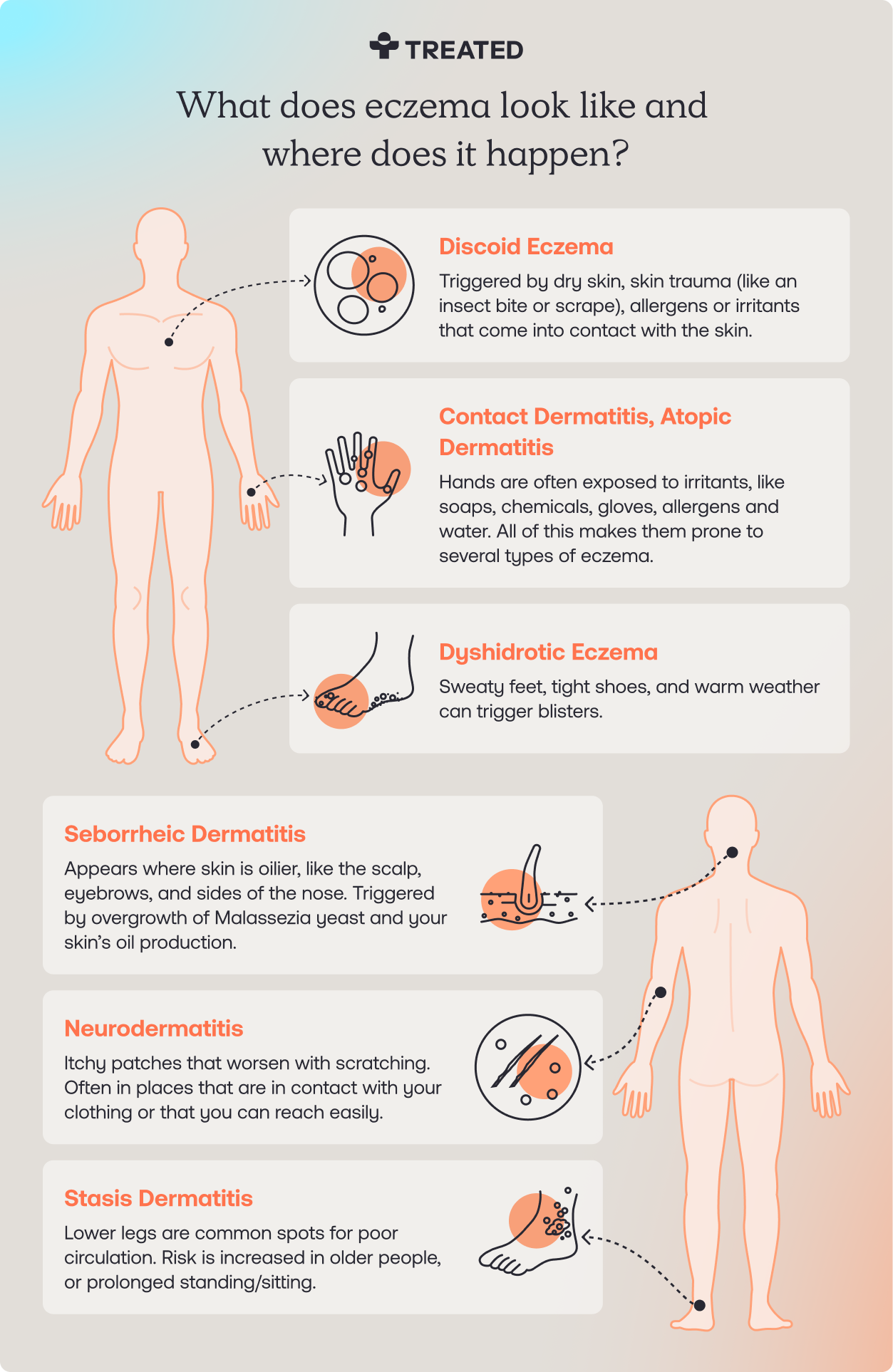
| Contact dermatitis |
Intense itch;
Inflamed, sore skin (pink, red, purple, brown or gray depending on skin tone);
Dry, scaly, or oozing skin. |
Direct contact with irritants or allergens, like:
Metals (nickel, gold);
Fragrances, preservatives, or hair dyes;
Latex, rubber, topical medicines;
Poison ivy or pet dander. |
| Atopic dermatitis |
Severe itch that can affect sleep or concentration;
Inflamed, dry, or cracked skin that may ooze;
Thickened skin or discolored patches in chronic areas. |
Thought to be an overactive immune response.
Triggers include:
Heat, sweat or scratchy clothing;
Harsh skincare or fragrances.
Also has been linked to a genetic mutation which affects the skin’s barrier. |
| Seborrheic dermatitis |
Rash with flaky white or yellow scales on greasy skin
Dandruff;
Discoloration (pink, red, purple, tan, brown or white depending on skin tone);
Often forms under body or facial hair, including eyebrows, beard, sides of nose, and scalp;
Can be itchy or uncomfortable, especially in oily areas. |
Not known exactly, but thought to be a combination of causes. Usually caused by an inflammatory response to Malassezia yeast on the skin.
Common triggers include:
Cold, dry weather (or season changes);
Stress;
Harsh soaps or hair products;
Hormonal changes;
Certain medications. |
| Dyshidrotic eczema |
Small, itchy blisters (often look like tapioca pearls) on hands and feet;
Burning or tingling before blisters appear;
Peeling, cracked, or dry skin as blisters heal;
Painful skin cracks (fissures) in severe cases. |
Exact cause unknown, often linked to other eczema types and family history.
Triggers include:
Contact with metals (nickel, chromium), laundry products;
Sweaty palms, frequent wet hands, handwashing jobs;
Hot, humid weather or seasonal allergies;
Stress, smoking, skin infections like athlete’s foot;
Some medications. |
| Neurodermatitis |
Thick, scaly patches of skin that may become leathery over time;
Patches can be discolored (red, brown, grey) and form lesions from scratching;
Intense itch that’s often worse at night or during rest;
Visible skin lines and scales. |
Cause unknown, likely linked to overactive nerve responses in the skin.
Triggers include:
Bug bites;
Nerve injury
Intense emotion;
Dry skin;
Tight clothing (especially wool or synthetic);
Heat. |
| Discoid eczema |
Coin-shaped patches on the skin, often on legs, arms or torso;
Lesions may ooze or crust over;
Itching, burning and very dry; surrounding skin;
Blisters and red, brown or pink spots depending on skin tone. |
Exact cause unknown, often linked to very dry or damaged skin.
Triggers include:
Cold, dry air or hot showers;
Skin trauma (like scrapes, bites, burns);
Certain medications; (retinoids, antivirals);
Stress, alcohol use. |
| Stasis dermatitis |
Swelling and discoloration around the lower legs and ankles;
Thickened, itchy, scaly or shiny skin;
Pain, heaviness, or aching in the legs;
Red, brown or purple skin that may ooze, crust, or form open sores in severe cases;
“Cayenne pepper” speckles (capillaritis) in early stages. |
Caused by poor circulation, usually due to weakened leg veins that allow blood to pool in the lower legs.
Risk increases with age, leg injuries, or surgeries (e.g. knee/hip replacements);
Not everyone with vein issues develops it, but poor circulation increases the likelihood. |
| Perioral dermatitis |
Pink, red, or purple bumps or papules around the mouth;
Pus-filled pustules;
Small, red patches that are dry and flaky (the colour of the patches may differ depending on the person’s skin). |
Although the exact cause is not fully known, some common triggers include:
Steroid creams and ointments;
Steroid tablets;
Steroid inhalers (used to treat asthma and COPD) |

 Fact Checked