
How to look after your mental health when losing weight
The effect that a weight loss journey can have on mental health, by an expert.
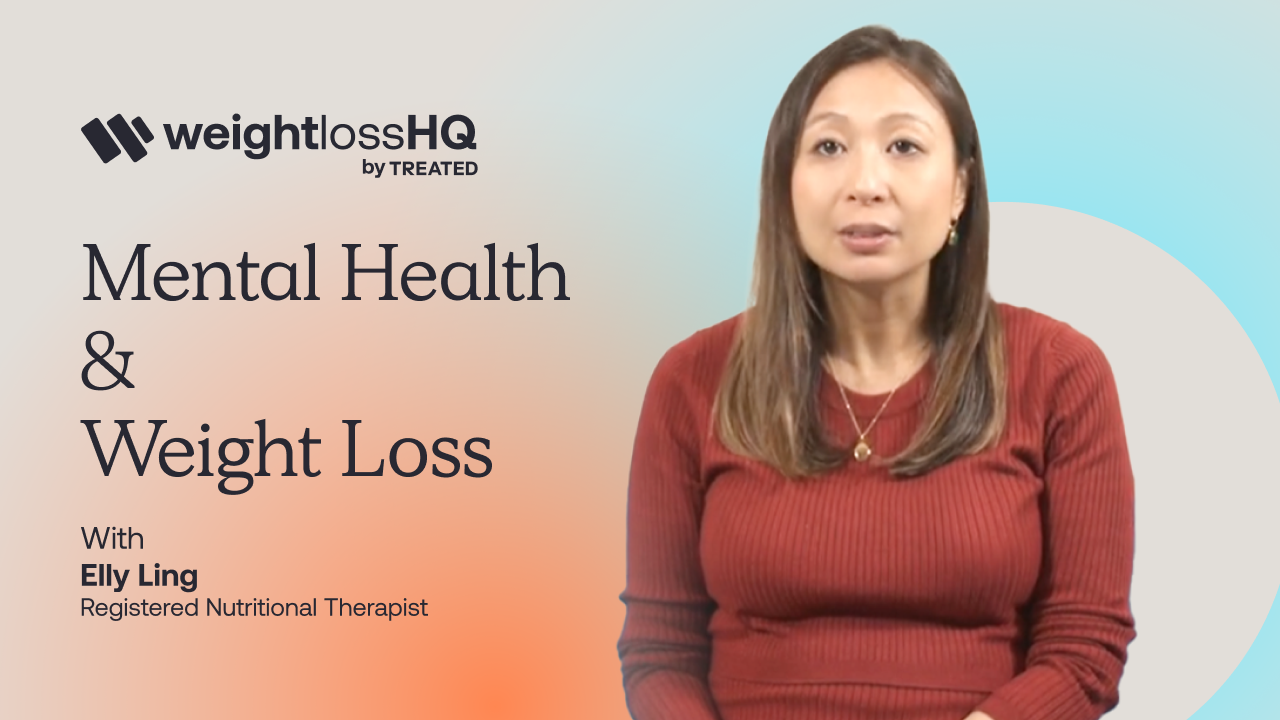

Hi, I’m Elly Ling, and I’m a certified Nutritional Therapist.
I’ve teamed up with Weight Loss HQ by Treated to show you how to get the best from your weight loss treatment, and give you some helpful tips on diet, health and happiness while losing weight.
Today I’m going to talk about how being on a weight loss journey can affect our mental health, because the two can have a complex relationship.
The first thing to do is approach your weight loss with realistic goals. Focus on overall progress and non-scale victories, and remember that it’s not about perfection. It’s normal to have setbacks, so be kind to yourself. Self-compassion is a powerful tool in your weight loss journey. Keep in mind that lasting change takes time.
Now let’s look at how food choices affect your mood.
Eating a balanced diet rich in fruits, vegetables, and whole grains nourishes your gut microbiome, which has a surprising connection to your brain health. It’s called the ‘gut-brain axis’, and it can be influenced by what you eat. It’s thought that healthy choices can boost positive hormones and reduce stress, while processed foods might cause a short-term mood lift but have more negative effects long-term.
Comfort eating can be a temporary coping mechanism, but relying on it for emotional relief can create an unhealthy relationship with food. Mindful eating can help you break free from this cycle. Pay attention to your feelings before, during, and after eating, or keep a food journal to help you understand your triggers and make informed food choices.
Lastly, losing weight is obviously really good for your physical health, and can make a big difference with mental health, but it isn’t a cure-all. While research does show that having overweight increases the risk of depression and anxiety, that doesn’t make losing weight a silver bullet for happiness. So keep in mind that, while it might solve some problems, it isn’t guaranteed to solve all of them.
So to sum up?
Sustainable weight loss is about feeling empowered, not just the number on the scale. Make sure your goals are realistic, and focus on long-term health.
And if you’re struggling with low mood or anxiety, remember you’re not alone. Talk to a healthcare professional – they can offer you support.
When we present you with stats, data, opinion or a consensus, we’ll tell you where this came from. And we’ll only present data as clinically reliable if it’s come from a reputable source, such as a state or government-funded health body, a peer-reviewed medical journal, or a recognised analytics or data body. Read more in our editorial policy.





Share your thoughts.
Was this info helpful?