
Beef, lentil and vegetable stew
Comforting one-pot stew that’s easy to digest. Chock-full of lean protein, fibre, & other nutrients.
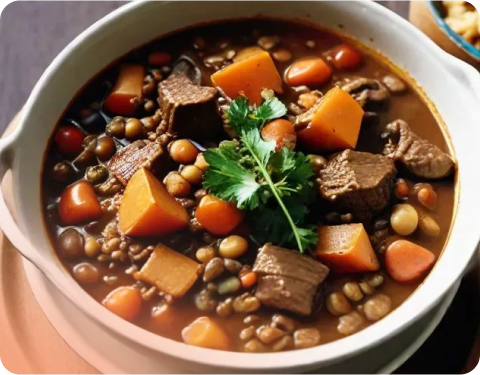

Ingredients
- 500g lean beef stew meat, cut into 1-inch cubes
- 1 cup dried green or brown lentils, rinsed
- 2 cups chopped kale or spinach
- 1 large onion, chopped
- 2 carrots, peeled and diced
- 2 celery stalks, diced
- 3 garlic cloves, minced
- 1 can diced tomatoes
- 4 cups low-sodium beef broth or vegetable broth
- 2 cups water (adjust as needed for desired thickness)
- 2 teaspoons dried thyme
- 1 teaspoon dried rosemary
- 1 bay leaf
- Salt and pepper to taste
- 2 tablespoons olive oil
Prep:
20 minutes
Cook:
90 minutes
Total time:
1 hour 50 minutes
Servings:
2
Nutritional values (per serving):
Calories:
797 kcal
Fat:
15g
Saturated fat:
3.8g
Dietary fibre:
27g
Carbohydrates:
65g
Sugars:
22g
Protein:
86g
Salt:
0.88g
This stew combines lean protein, fibre and a variety of nutrients in a comforting, easy-to-digest meal. It can also be made in a single pot, saving time on the washing up. And if you’re vegan, simply omit the beef (start at step 2).
Instructions:
- In a large pot or casserole dish, heat 1 tablespoon of olive oil over medium-high heat. Add the beef cubes in batches, seasoning with a little salt and pepper, and brown them on all sides. Remove the beef from the pot and set aside.
- In the same pot, add another tablespoon of olive oil. Add the onion, carrots and celery. Sauté for about 5 minutes until the vegetables start to soften. Add the garlic and cook for another minute until fragrant.
- Return the browned beef to the pot. Add the lentils, diced tomatoes with their juice, beef or vegetable broth, water, thyme, rosemary and bay leaf. Stir to combine. Season with salt and pepper to taste.
- Bring the mixture to a boil, then reduce the heat to low. Cover and simmer for about 1 to 1.5 hours, or until the beef is tender and the lentils are cooked through. Stir occasionally, and add more water if the stew seems too thick
- Add the kale or spinach to the stew in the last 10 minutes of cooking, allowing it to wilt but retain its colour and nutrients.
- Remove the bay leaf. Taste the stew and adjust the seasoning with more salt and pepper if needed.
- This dish can be served on its own or with a side of whole grain bread for dipping.
How we source info.
When we present you with stats, data, opinion or a consensus, we’ll tell you where this came from. And we’ll only present data as clinically reliable if it’s come from a reputable source, such as a state or government-funded health body, a peer-reviewed medical journal, or a recognised analytics or data body. Read more in our editorial policy.
Last updated on Jul 03, 2024.




Share your thoughts.
Was this info helpful?