
Tuna and chickpea pasta salad
Great for batch-prep, a cold recipe that balances lean protein, complex carbs, healthy fats & fibre
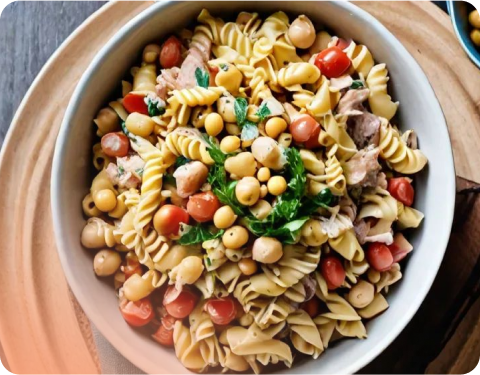

Ingredients
- 1 cup of whole wheat or legume-based pasta
- 1 can of tuna* in water, drained
- 1 can of chickpeas, rinsed and drained
- 1 small red onion, finely chopped
- 1 small red bell pepper, diced
- 1 small cucumber, diced
- A handful of cherry tomatoes, halved
- ¼ cup of chopped fresh parsley (or herb of choice)
- 2 tablespoons of extra virgin olive oil
- 1 tablespoon of lemon juice
- Salt and pepper to taste
- Optional: A sprinkle of feta cheese or olives for extra flavour
- *Tuna can be swapped for pre-cooked chicken/turkey breast pieces.
A satisfying and nutritious salad that’s really easy to batch-cook in advance. Cook up a few portions and keep them in the fridge for healthy lunches that contain a balanced mix of lean proteins, complex carbohydrates, and healthy fats whenever you need them.
Don’t feel like tuna? Not a problem. Just swap it out for some pre-cooked chicken or turkey breast for an alternative twist.
Instructions:
- Bring a large pot of salted water to a boil. Add the pasta and cook according to package instructions until al dente. Once cooked, drain and rinse under cold water to cool. Set aside.
- In a large mixing bowl, combine the cooled pasta, drained tuna, rinsed chickpeas, chopped red onion, diced red bell pepper, diced cucumber, and cherry tomatoes. Toss gently to mix all the ingredients.
- In a small bowl, whisk together the olive oil, lemon juice, salt, and pepper. Pour this dressing over the pasta salad and toss again to ensure everything is evenly coated.
- Add the chopped parsley and give the salad a final toss. If using, sprinkle feta cheese or olives on top for added flavour.
- For the best flavour, let the salad chill in the fridge for at least 30 minutes before serving. This allows the flavours to meld together.
When we present you with stats, data, opinion or a consensus, we’ll tell you where this came from. And we’ll only present data as clinically reliable if it’s come from a reputable source, such as a state or government-funded health body, a peer-reviewed medical journal, or a recognised analytics or data body. Read more in our editorial policy.


Share your thoughts.
Was this info helpful?